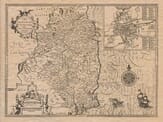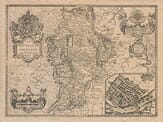
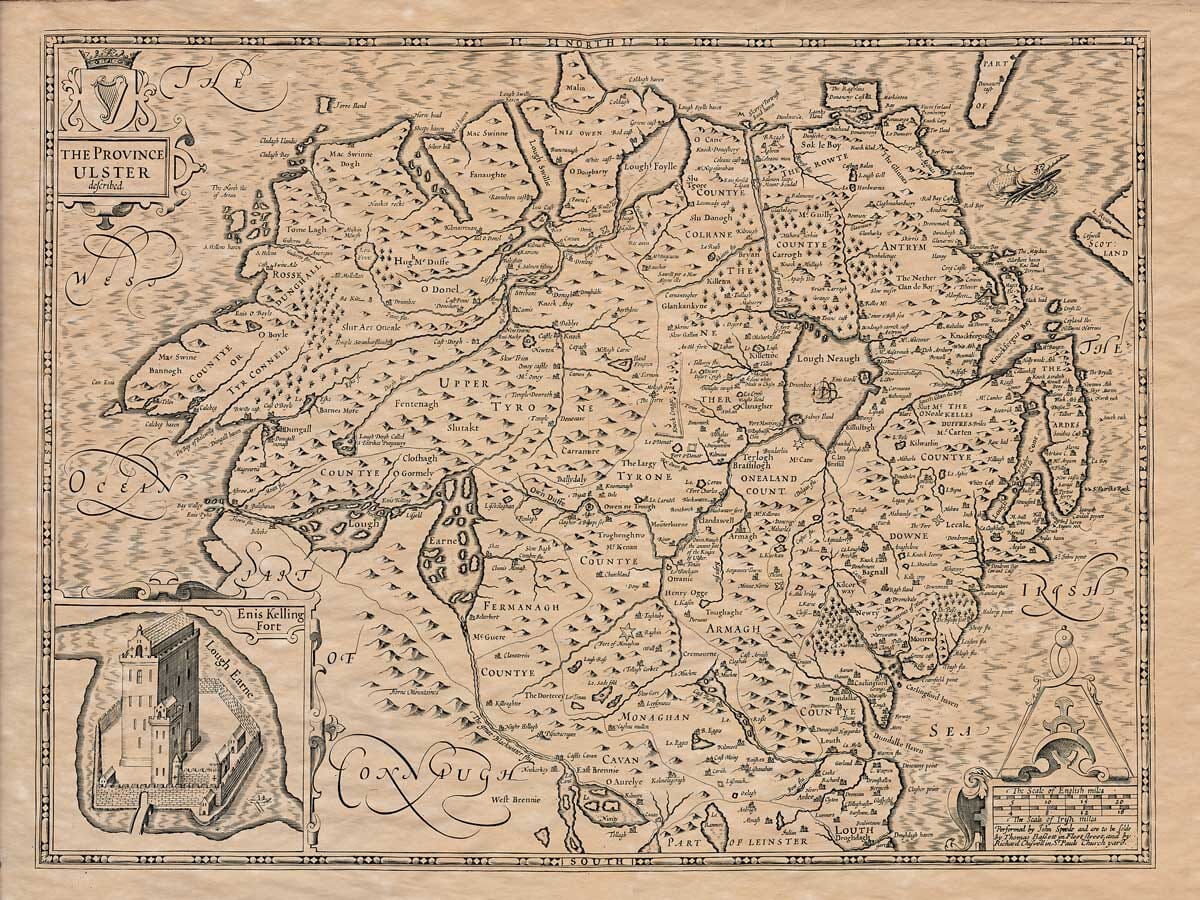
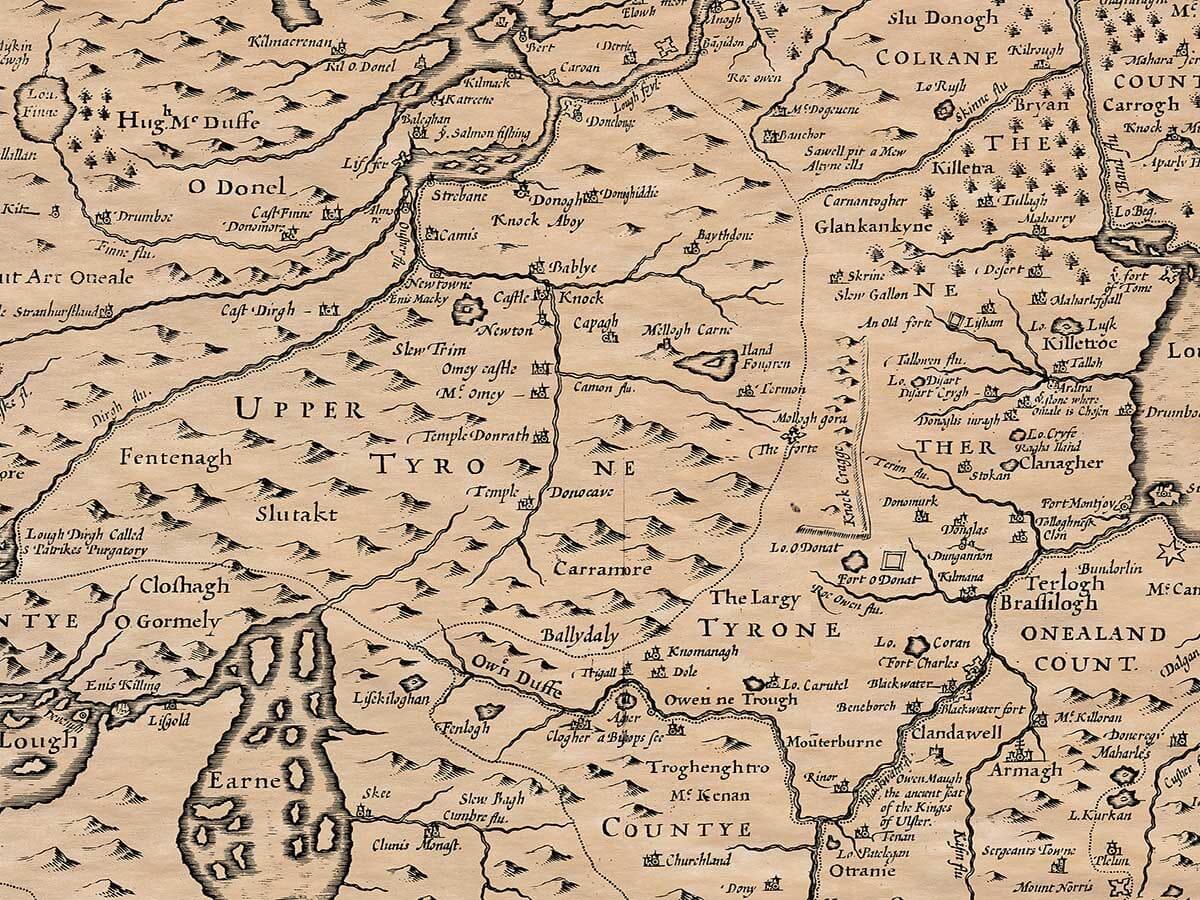
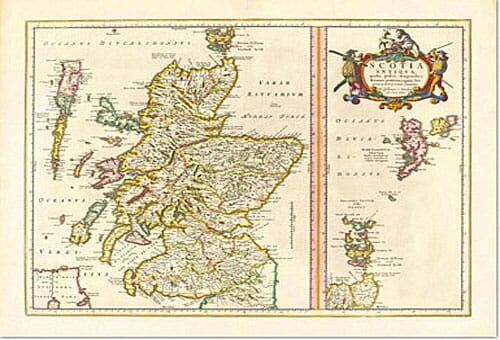
The Province of ULSTER
from the verso of John Speed’s map of 1600 and forming a useful historical reference.
The bounds of Ulster.
This Province, called by our Welsh Britains, Ullyn, in Irish Cuinack, in Latin Ultonia, and Vlidia in English Vtlster; on the North is divided by a narrow Sea from Scotland; Southward it extends it self to Connagh and Leinster; the East part lieth upon the Irish Sea; and the West part is continually beaten with the boisterous rage of the main West Ocean. This Province and furthest part of Ireland affronteth the Scottish Islands, which are called the Hebrides, and are scattered in the Seas between both Kingdoms; whose Inhabitants at this day is the Irish Scot, successour of the old Scotian.
The form.
(2) The form thereof is round, reaching in length from Colrags Haven in her North, to Kilmore in her South, near an hundred miles; and in bredth from Black Abbey in her East, to Colrags point in her West, one hundred thirty and odd miles: The whole in circumference, about four hundred twenty miles.
The air.
(3) This Country seldom feeleth any unseasonable extremities, the quick and flexible winds cooling the heat of Summer, and the soft and gentle showers mollifying the hardnesse of the Winter. Briefly, the frozen nor torrid Zone have not here any operations; the clouds in the air are very clear and pleasant, yea, and when they are most importune and unwholesome, not of long continuance; the rough winds holding them in continual agitation.
The Soil.
(4) First, in the equal temperature of the coast, the ground is brought forth great store of several Trees, both for building and bearing of fruit; plentiful of grass for breeding of Cattle, and is abundant, fertil, and much holme for plow. Sheep and Oxen; the Rivers likewise yield double tribute, for pleasure and for profit; very vales for pleasure of sport, and Fish of store, both for their own sustenance and for trade abroad of others. Salmons in some Rivers of this Country are gotten more in number then in any part else of Europe.
Plenty of Salmon.
To speak (in general) though in some places it be somewhat barren, troubled with Loughs, Lakes, and thick Woods, yet is it every where fresh, and full of Cattle and Forage, ready at all times to answer the husbandman’s pains. But Nature is here so little beholden to Art or Industry, that the various hews upon Banks, the shady Groves, the green Meadows, hanging Hills and Fields fit for Corn (if they were manured) do seem to be angry with their Inhabitants for suffering it to grow wild and barbarous through their own negligence.
Negligence of the Inhabitants.
(5) This Country in Ptolemy’s days was wholly possessed by the Vellani, Darnii, Robogdii, and Erdini, who branched and spread themselves into the several parts of that Iland.
(6) The people of this Province were accustomed in controversies and solemn protestations, to swear by S. Patrick’s Staff, which oath they feared more to break, than if they had sworn by the Holy Evangelists. Their ancient custom in making their King was this: A white Cow was taken, which the King must kill, and seeth the same in water, wherein the man must bathe himself naked; and sitting in the Cauldron wherein it was sod, accompanied with his people round about him, they are all to eat of the Flesh and drink of the Broth, wherein he sat, without Cup, or Dish, or use of hand. How far these superstitions and ceremonials were different from the ceremonies of other civil Monarchies, we may well perceive by these and the like observations of those gross times; and as they are more barbarous then in any other part of the Iland beside.
S. Patrick’s Staff.
Their custom in creating a King.
(7) Historians relating of Ireland tell of several Islands in several Provinces: some full of Angels, some full of Devils; some for one day only, some for ever. In some none may live, some where none can die; and some full of trees, flowers, and waters, that seem to smile. Yet of certainty we may well esteem that as a fable, as an headless accusation.
S. Patrick’s Purgatory is a thing of much note in the West of this Province; as well for the narrow cave in the ground, near a Lake (called Lough Erne) opening into a region of ill air, out of which vast streams issuing, promise marvellous apparitions, or rather fancies of devised thought (which, as some ridiculously deem, was digged by Vulcan’s own tools, commonly painted in Hell). This is now in the hands of the Friers Eremites, called Augustines, who have divided the place into two parts; the one called the Paradise, which is the Isle of Purgatory, and S. Patrick’s Purgatory; to enter into which, great devotion is used.