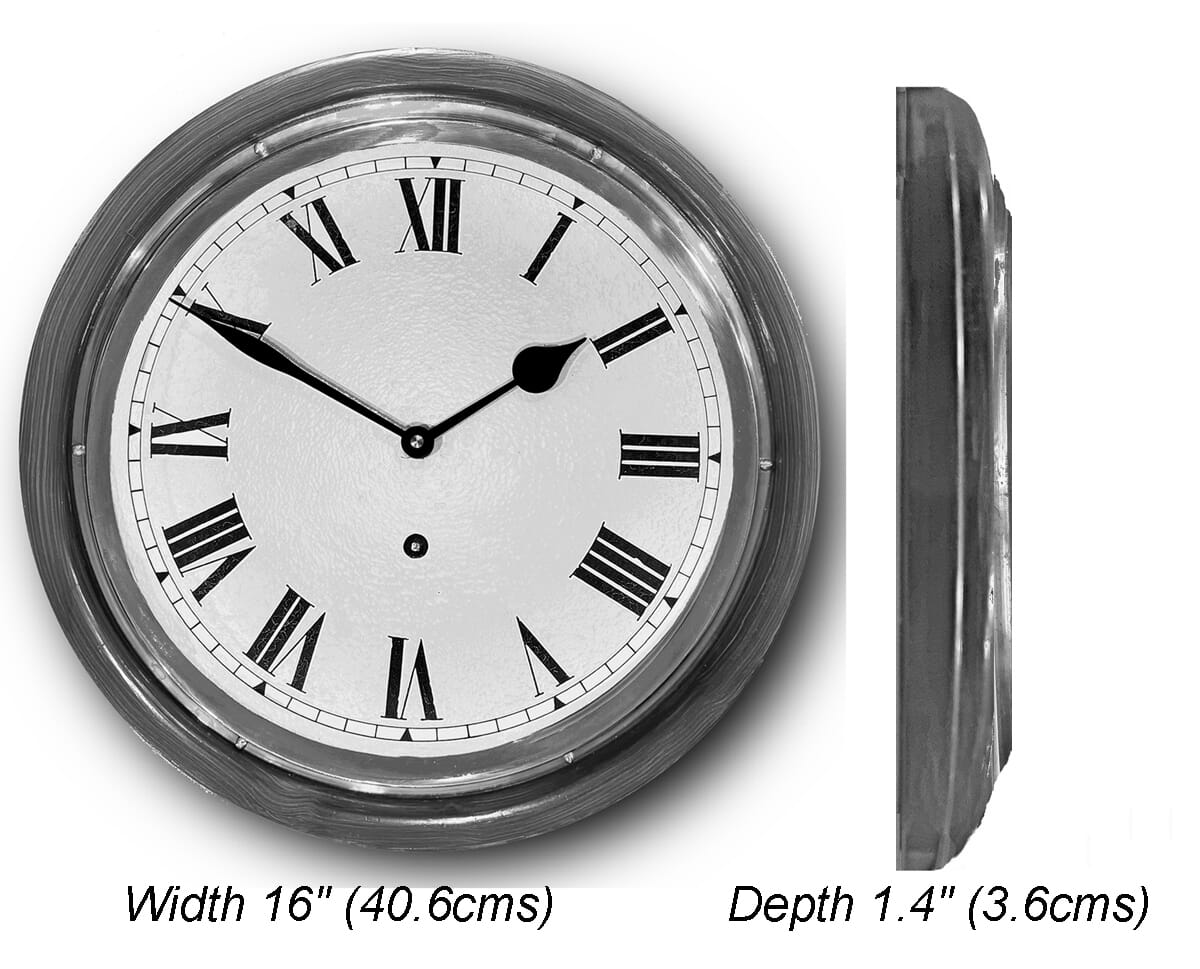
Description
PLEASE NOTE
We are a small family operation and each and every clock we produce is made to your individual design choice.
Delivery time is subject to availability.
Current lead time is 2–3 weeks
ORDER NOW TO AVOID DISAPPOINTMENT !
Windsor & Eton Central Station: An Historic Gateway to Windsor
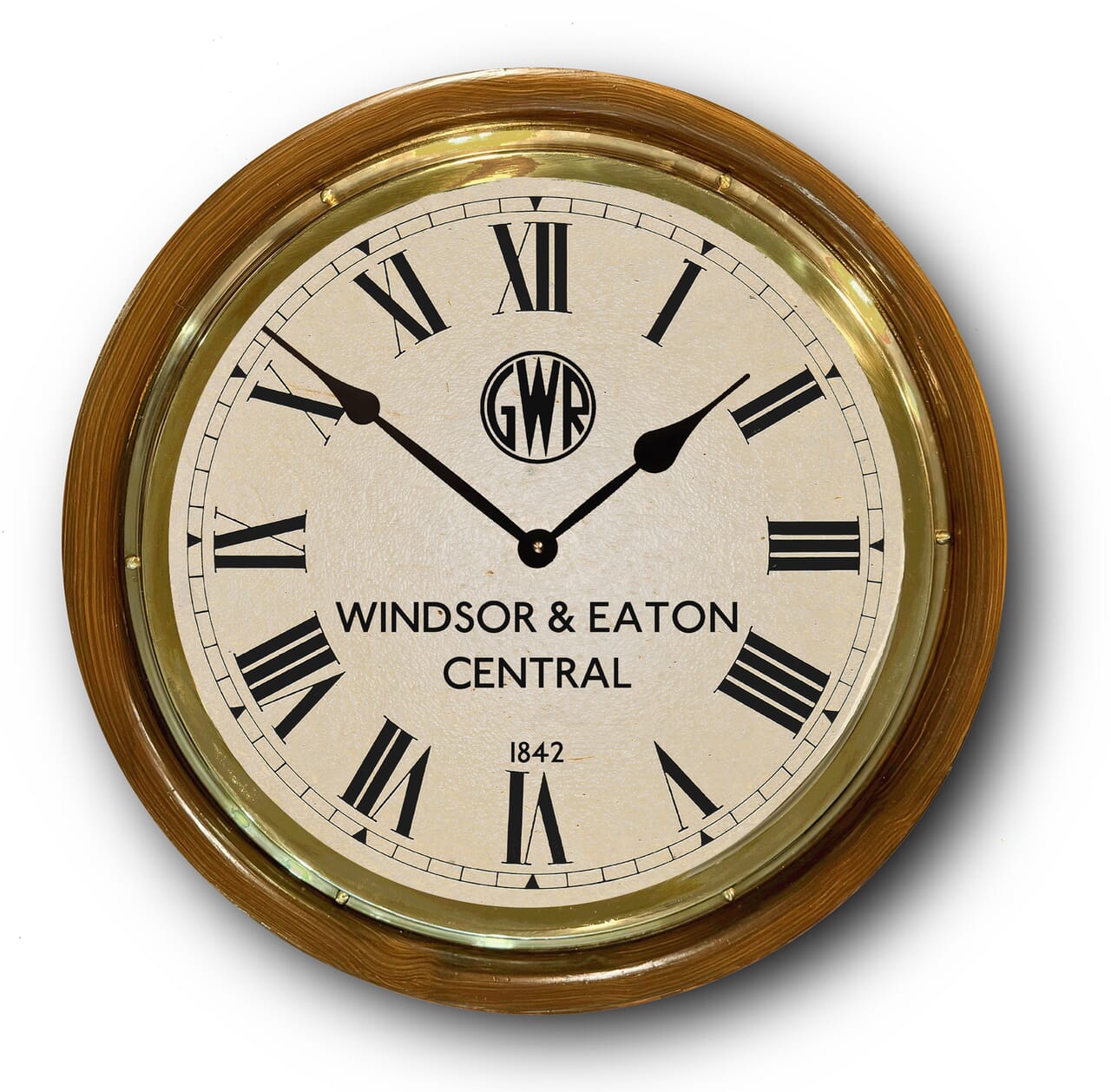
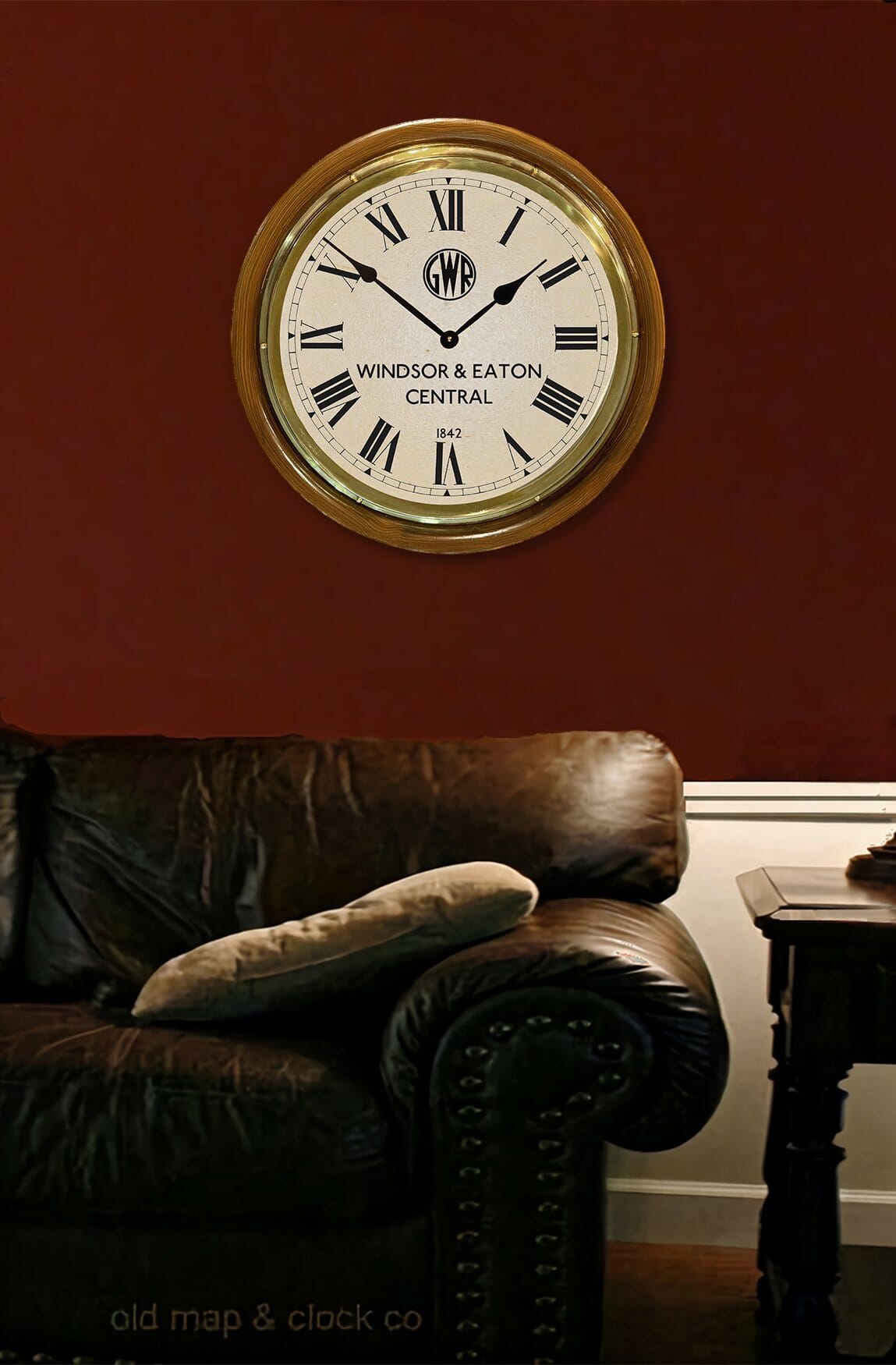
Windsor & Eton Central station, located in the heart of Windsor, Berkshire, England, stands as a testament to the rich history of the town and its transportation heritage. Situated on Thames Street, directly across from Castle Hill, the station offers not only a functional transport hub but also a glimpse into the past, being just 400 meters away from Windsor’s other station, Windsor & Eton Riverside. This station serves as the terminus for the Slough to Windsor & Eton line, operated by Great Western Railway whose iconic logo we feature on our souvenir of Windsor Station clock, and has long been a vital part of the town’s infrastructure.
A Storied Beginning
The history of Windsor & Eton Central station dates back to 8 October 1849, when it first opened under the name “Windsor.” Its creation was met with some resistance, particularly from the leadership of Eton College, who were concerned about the moral impact a railway station might have on the students. Despite this opposition, the station was built and became an essential link between Windsor and the broader railway network.
The station was renamed twice during its history: first to Windsor & Eton on 1 June 1904, and later to Windsor & Eton Central on 26 September 1949, reflecting its growing significance.
Expansion and Railway Rivalries
In the late 19th century, rail services to Windsor were expanded, reflecting the growing demand for access to the town, especially from London. In 1863, the Metropolitan Railway, which had opened the world’s first underground line, began running through services to Windsor from Farringdon Street. These services initially used broad gauge trains, as the original Metropolitan Railway track was designed for both standard and broad gauges. By 1865, Windsor had become a regular stop for ten trains per day from London.
In 1883, the District Railway, which was expanding westward, began its own service to Windsor from Mansion House. However, this service struggled to gain traction, likely due to the combination of inconvenient rolling stock and Windsor’s relatively affluent population, making it an unattractive commute for many. The service was discontinued in 1885.
The Station’s Grand Transformation
The station underwent significant changes in the early 20th century, particularly for Queen Victoria’s Diamond Jubilee in 1897. Originally a modest structure, Windsor Station was completely rebuilt, with a much grander frontage designed to mirror the elegance of Paddington Station in London. The new station featured two island platforms, a bay platform on the south side, and a royal waiting room on Platform 4. This royal waiting room was used on significant occasions, such as the funeral of King George V in 1936, before being repurposed in 1950 for use by the British Transport Police.
The station’s approach is marked by the stunning Windsor Railway Bridge, designed by the famous engineer Isambard Kingdom Brunel. The bridge is a rare surviving example of his wrought iron work and remains a striking feature of the station’s design.
The Goods Yard and Industrial Past
North of the station, a large goods yard was situated at ground level between the station and the River Thames. Due to the elevated position of the station, the yard was accessed by a steep incline built along the viaduct. This incline led to a short headshunt near the river bridge, providing access to the yard’s sidings. The yard played an important role in supporting the local community, handling both freight for the town and supplies for the nearby Windsor gas works, which received coal and dispatched coke and tar.
However, as rail freight services began to decline in the 1960s, the goods yard and incline were eventually removed, and the space was converted into a coach park. Though the yard is no longer in use, the outline of the incline remains visible on the side of the viaduct, offering a quiet reminder of the station’s industrial past.
Decline and Restoration
The mid-20th century saw several reductions in the station’s operational capacity, as platforms 3 and 4 were taken out of use in 1968, followed by platform 2 in 1969. The station’s remaining platform was also truncated in subsequent rebuilds, further diminishing its size and function.
In 1982, British Railways, in partnership with Madame Tussauds, created the Royalty & Empire exhibition at the station to celebrate Queen Victoria’s Diamond Jubilee. The exhibition, which ran until the late 1990s, featured a series of wax figures, including a full-size replica of the Royal Train, as well as animatronic figures recreating historical moments. One of the most striking exhibits was a full-size replica of the locomotive The Queen, part of the Great Western Railway’s 3031 Class, which was displayed on the viaduct and fitted with smoke and steam generators. Though the exhibition was dismantled, the locomotive The Queen remains a feature of the station’s concourse, incorporated into a restaurant where it continues to capture the attention of visitors.
Present Day Windsor & Eton Central

Image Courtesy of DLG Architects
The restoration of the the former Grade II-listed Windsor Royal Station in the 1990’s, removing modern additions to return the space to its historical roots. The former goods yard has been transformed into a new terrace of boutique shops, designed to reflect the decorative screen wall that once separated the station’s commercial area from the Royal route to the Castle. Many original features have been preserved, including the Jubilee Arch, cobbled stones, and Queen Victoria’s Royal Waiting Room. With over 40 boutique shops, continental-style restaurants, cafes, bars, and an arts and crafts market.
Windsor & Eton Central station remains a key part of the town’s history, linking past and present. From its humble beginnings in the 19th century to its current role as a gateway for both locals and tourists, the station continues to stand as a symbol of Windsor’s evolution over the centuries, offering a blend of historical heritage and modern convenience.