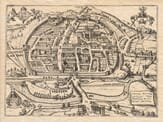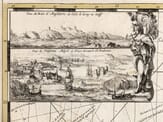
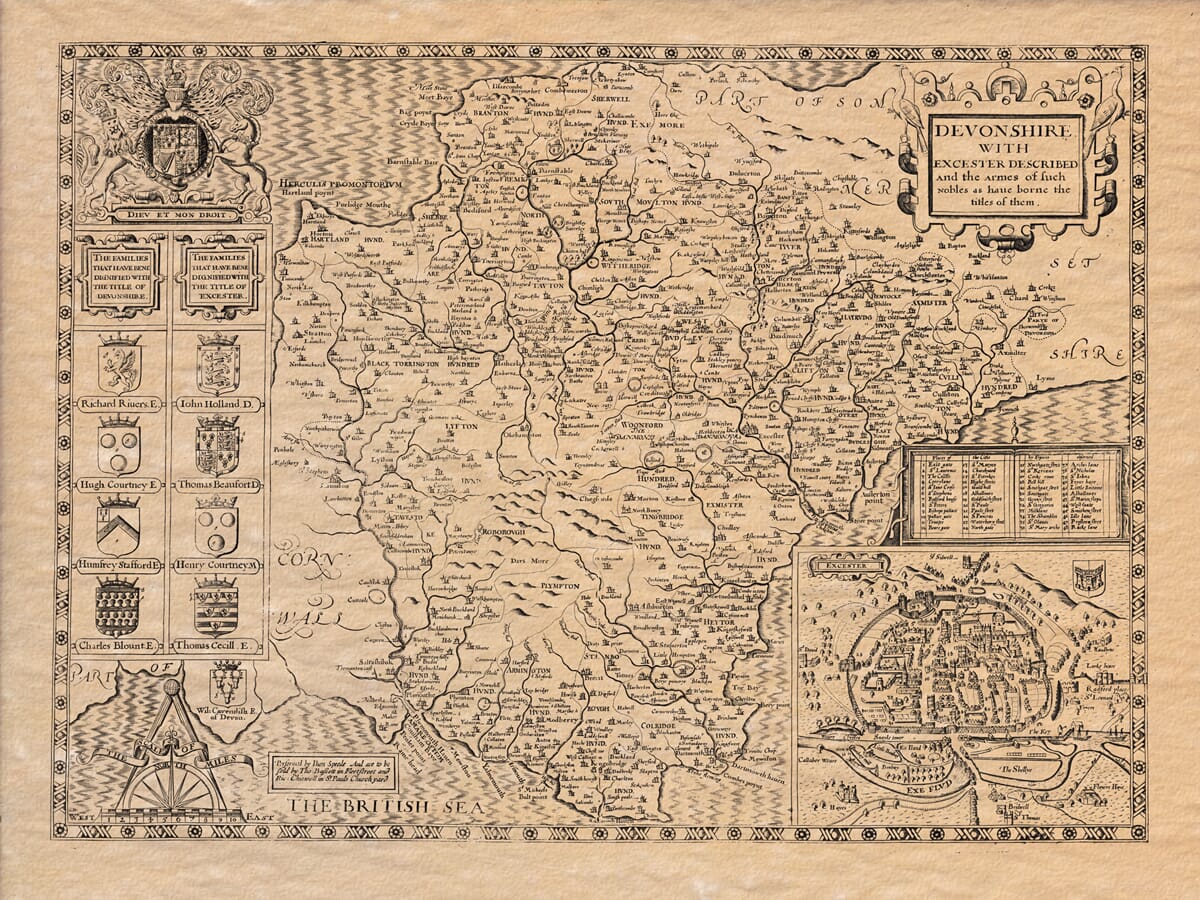
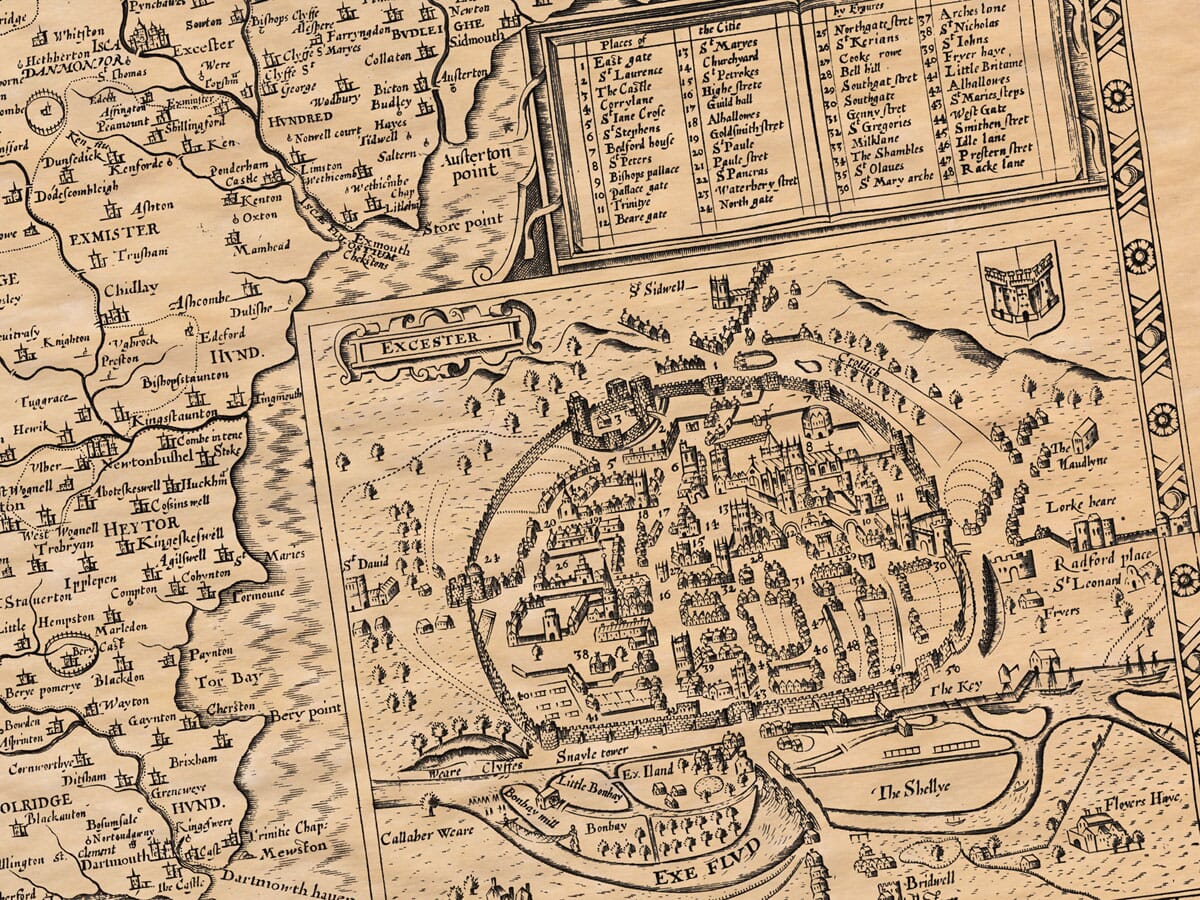
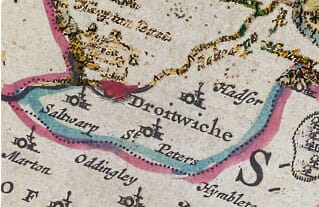
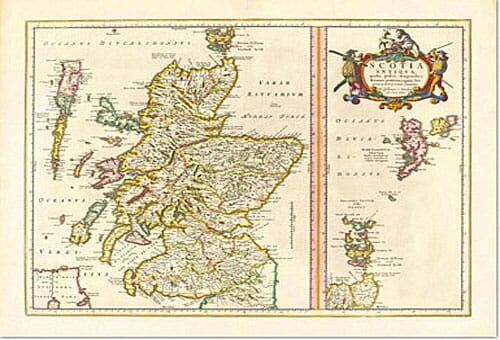
 A Town Plan of Exeter features within the map.
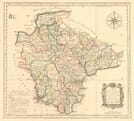
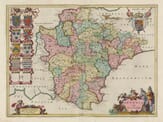
John Speede added notes to the verso of his Old Map of Devon . . . here is a modern translation . . . the original appears below.
A Town Plan of Exeter features within the map.
John Speede added notes to the verso of his Old Map of Devon . . . here is a modern translation . . . the original appears below.
Devonshire, in Latin by the Cornish-Britains called Dewnania, by the English Saxon Deven-scyre, and by contraction of the vulgar Deyvne, is not derived from the river Dawes, as some would have it, but from the people Dannmonii. The same people we mentioned in Cornwall, and whom Ptolemy placed in the western borders.
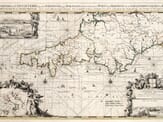
The west of this county is bordered by Cornwall and washed by the River Tamar. The east borders Somerset and Dorset. The north and south sides are almost entirely on the Bristol Channel and Severn Sea. From Countesham in the north to Salcomb Haven in the south is about 45 miles. From Hartland Point in the west to Thornmouth East in the east is about 70 miles. So the full circuit of the county is around 200 miles.
About 70 miles by 45 miles at its widest points.
The air is sharp, healthful, and good.
The soil is productive and fertile, though stony in places. The land is so well-cultivated that no farmer ever sits idle, and the sea provides much wealth, especially on the north and south coasts. Fishermen journey long distances, risking life and limb for profit, and the soil yields grain and other crops well.
As for harbours, this county has many, with easy access to the sea. It’s ideal for shipping and trade. Among these, Exeter is famous for being one of Brute’s first settlements (though this may be more poetic than historical). Geoffrey of Monmouth mentions it in his writings.
“The Gods did guide his sail and course; the winds were at command,
And Totnes was the happy shore where first he came to land.”
With more credible and lamentable sources, the Danes first invaded in 787 A.D., when Brightkirk, a Saxon king’s steward, tried to question their intentions. The Danes killed him and returned to their ships, eager for further ventures.
Much later, Plymouth achieved great fame as the departure point for explorers and defenders of England. From here, Sir Francis Drake began his famous voyage in 1577, sailing around the globe in just over two years. Sir John Hawkins and Lord Charles Howard of Effingham also set sail from here against the Spanish Navy in 1588, defending England’s shores valiantly.
The county has excellent resources: wool, cloth, beef, and corn. Rich and fertile lands support plentiful livestock and agriculture. Deer, game, and fish are also abundant.
Exeter, the chief city of the county, lies by the River Exe. It is believed to have been founded by Antonius Emperour, for the Dannmonii tribe, and was later fortified by Vespasian. It stands beautifully on a hill, protected by walls with towers and gates. It once had a castle called Rougemont, from where the Earls of Cornwall ruled. Several notable churches and religious houses stand here, like St. Peter’s Cathedral and the Bishops’ See.
In 1003, the city was attacked by the Danish under Swanus, who burned much of it, but the people bravely rebuilt it. William the Conqueror laid siege to it again in 1067 when the citizens refused to open the gates, but he spared them after they submitted. The city flourished afterward and was governed by a mayor and many officials.
Latitude ranges from 50° to 52°. The city’s air is healthful. It is noted for learning, especially for having nurtured St. Boniface, apostle of Germany.
This county contains many remnants of battles and antiquities: stone circles, ancient tombs, and Roman inscriptions. There is also a burial place of Hubba the Dane, near Tawton. Letters of the Danes remain carved in stones there.
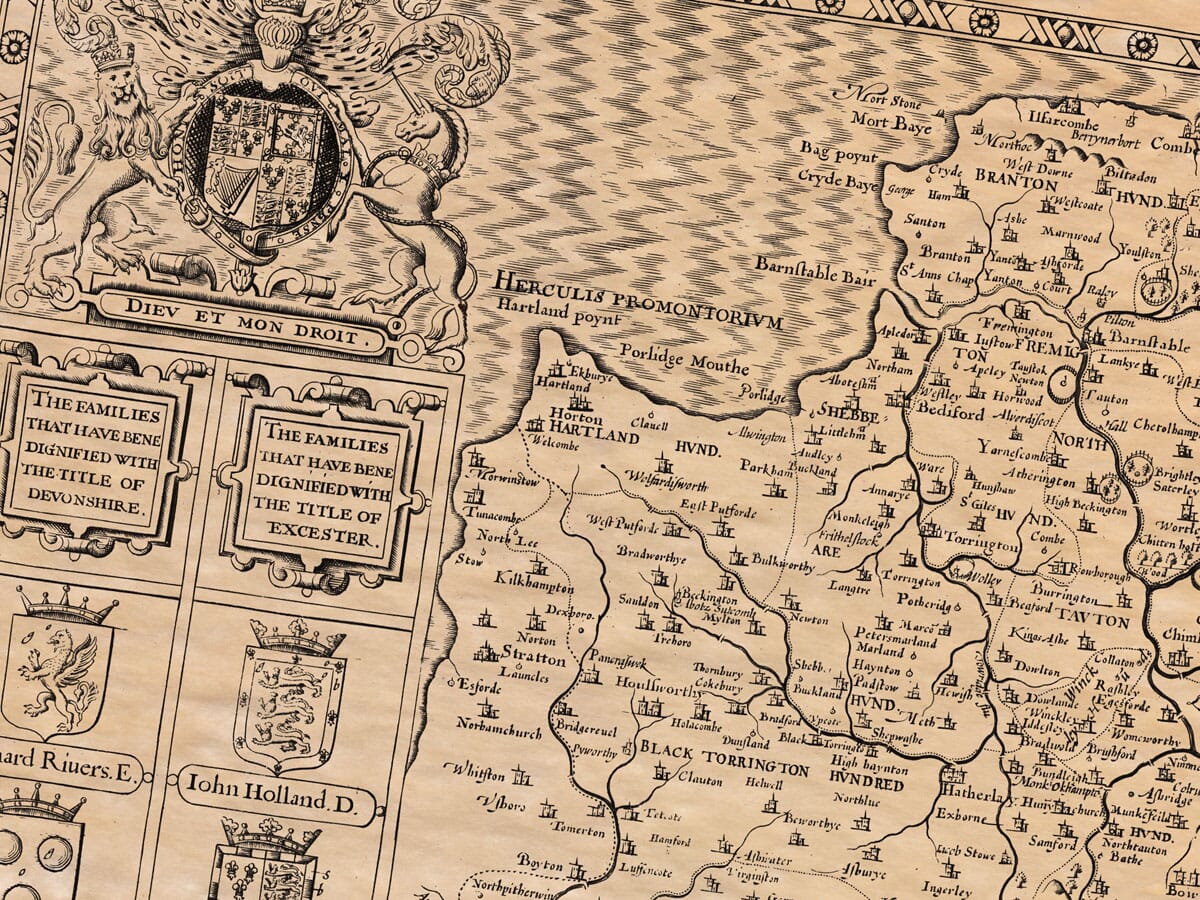
The title Duke of Devonshire has been granted to a few noble families, including the Holland and Courtenay families. The Courtenays were once Earls of Devon, with Philip Courtenay most notably.
Many religious houses existed here, including Exeter, Tavistock, Totnes, Hartland, and Barnstaple.
The county is divided into thirty-three hundreds (administrative regions) and many parishes, each with their own churches.

Description on the verso of John Speede’s Old Map of Devon