The Saxon period (or Anglo-Saxon period) refers to the time in British history from around the 5th century to 1066 AD. This period is crucial for understanding the formation of England as a unified kingdom. Here’s a brief overview of the main phases and characteristics of the Saxon period:
1. Early Saxon Period (c. 410 – 600 AD)
- After the Roman withdrawal from Britain in 410 AD, Anglo-Saxon tribes, including the Angles, Saxons, and Jutes, began to settle in Britain, particularly in the eastern and southern parts.
- The early Saxons were pagans, and their culture was heavily influenced by Germanic traditions. They established several small kingdoms, and the migration of these tribes marked the decline of Roman influence in Britain.
- The Anglo-Saxon Chronicle, written later, provides some accounts of this period, though much of it remains unclear due to the lack of detailed written records from this time.
2. Middle Saxon Period (c. 600 – 800 AD)
- During this time, Christianity began to spread through Britain, particularly after the missions of St. Augustine in 597 AD, which was sent by Pope Gregory I to convert the Anglo-Saxons to Christianity.
- The Anglo-Saxon kingdoms began to form larger political entities, with Wessex, Mercia, and Northumbria emerging as the most powerful kingdoms. These were often in conflict with each other.
- The Vikings began raiding Britain toward the end of this period, marking the beginning of a new chapter in Anglo-Saxon history.
3. Late Saxon Period (c. 800 – 1066 AD)
- The Vikings, particularly the Danes, continued their raids throughout the 9th and 10th centuries. The Anglo-Saxon kingdoms, especially Wessex under King Alfred the Great (871–899), fought to resist Viking invasions.
- Alfred’s reign marked a significant effort to defend against the Vikings and to promote learning and culture. He initiated reforms in law, military organization, and education.
- Eventually, the Vikings settled in parts of England, and the area they controlled became known as the Danelaw.
- The late Saxon period culminated in the Battle of Hastings in 1066 AD, where William the Conqueror from Normandy defeated King Harold II, leading to the Norman Conquest and the end of Anglo-Saxon rule.
Society and Culture
- Language: Old English (Anglo-Saxon) was spoken during this time, which is quite different from Modern English but still shares some roots with it.
- Religion: The Anglo-Saxons were initially pagan, but Christianity gradually became dominant from the 6th century onwards, especially after the missions from Rome and Ireland.
- Law and Government: The Anglo-Saxons developed a system of laws, including “wergild” (compensation for wrongs), and a form of local governance where local leaders (called “earls” or “thegns”) managed regions.
- Art and Architecture: The Anglo-Saxons created beautiful metalwork, illuminated manuscripts, and church buildings. Famous artifacts like the Sutton Hoo treasure reflect their craftsmanship.
Key Events and Figures
- King Alfred the Great: Known for defending Wessex against Viking invasions and promoting education, law, and literacy.
- The Viking Invasions: The Viking raids began in 793 with the attack on Lindisfarne, leading to significant shifts in power dynamics in Britain.
- The Battle of Hastings (1066): The defeat of King Harold II by William the Conqueror ended the Saxon period and brought Norman rule to England.
The Saxon period laid the groundwork for many aspects of English culture, governance, and language, and its end marked the beginning of a new chapter under Norman rule.
Who is John Speede ?

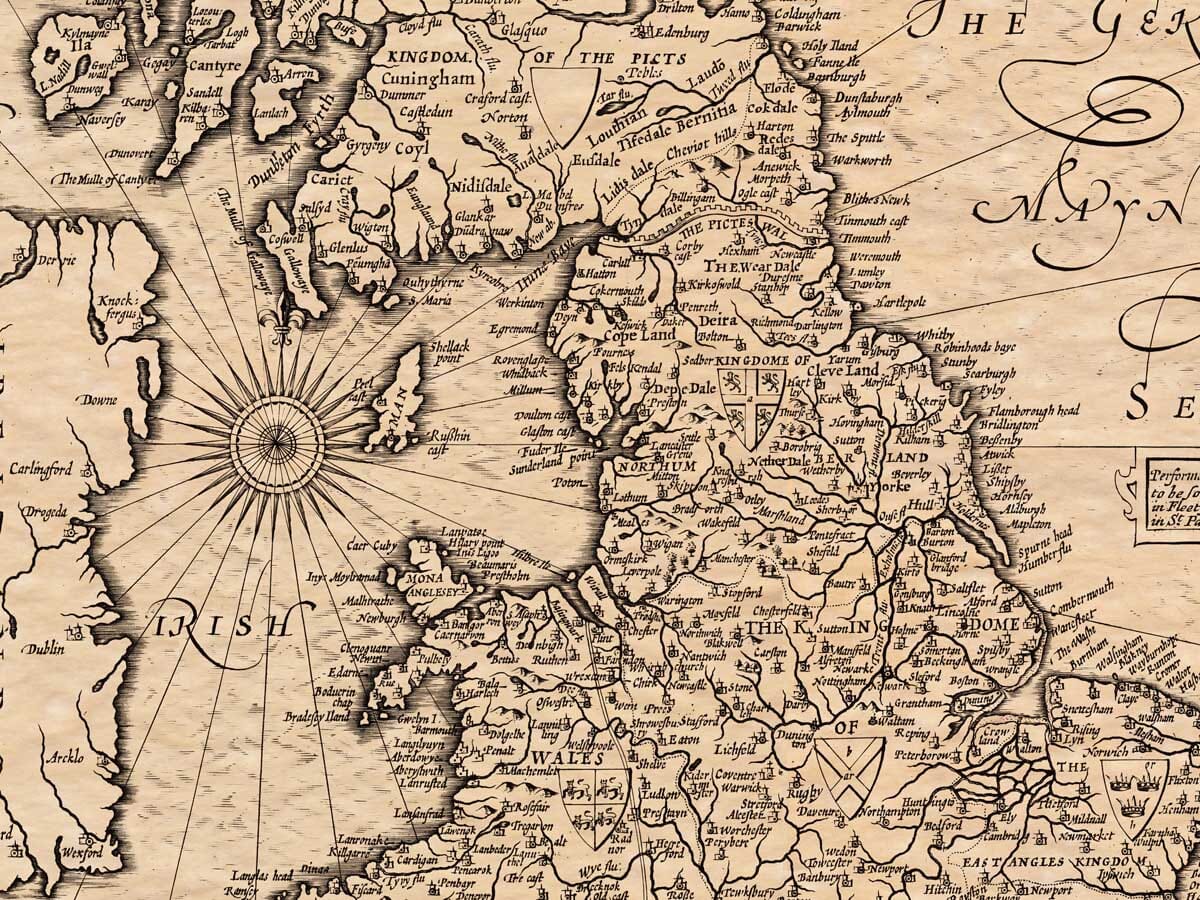
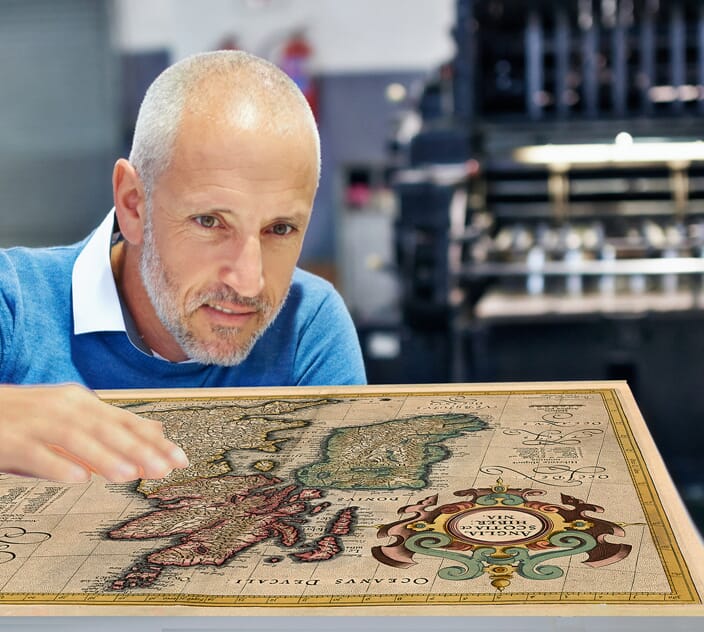
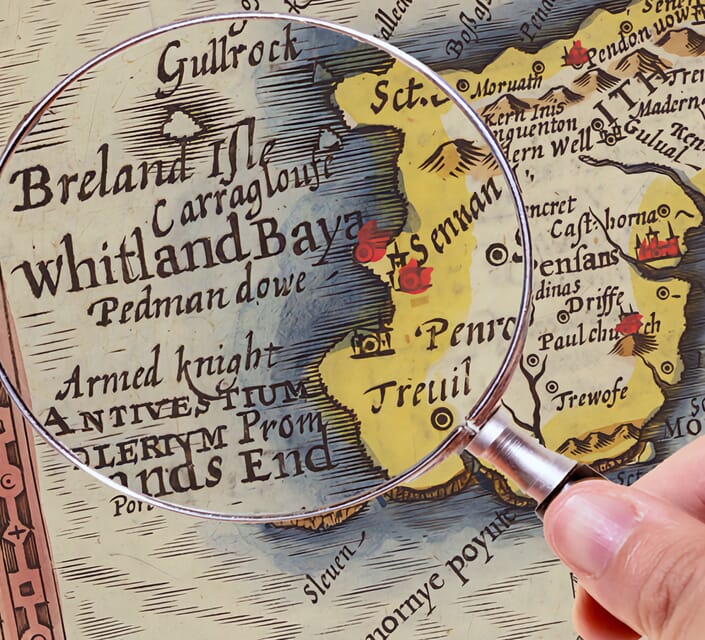
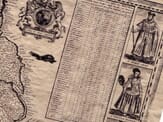
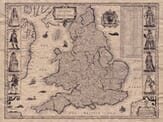
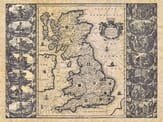
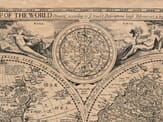
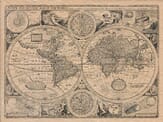
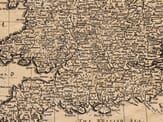
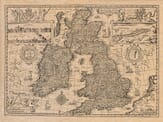
In his youth John Speede was thought to have “a very rare and ingenious capacity in the drawing and the setting forth of maps”. He compiled his maps individually between 1596 and 1610, and published them in four books known as “the Theatre of the Empire of Great Britain”. It was the first Atlas to encompass all the counties of Britain and became the best known collection of English county maps. John Speede was the son of a tailor, born in about 1552 in Cheshire. Like his father, he became a Freeman of Merchant Taylor’s Company, but devoted most of his leisure time to map making. In 1598 he found a wealthy patron, Sir Fulke Greville, who secured him a post in Her Majesty’s Customs where, with Queen Elizabeth’s support, he continued his map making. The inclusion of Royal portraits and battle sites elevated his craft to an elaborate work of art.
As Samuel Pepys remarked in 1662 whist searching the Forest of Dean for sources of timber to build ships for the Navy, “Speede’s maps there showed me how it lies”.
To own a John Speede map, is to own a part of history.
Everyone with a love of this country and an interest in her local and national history should own and enjoy at least one of these masterpieces. Speede also mapped other countries – be sure to look through the Europe & World sections of our site.
Portrait courtesy of the National Portrait Gallery