


Description
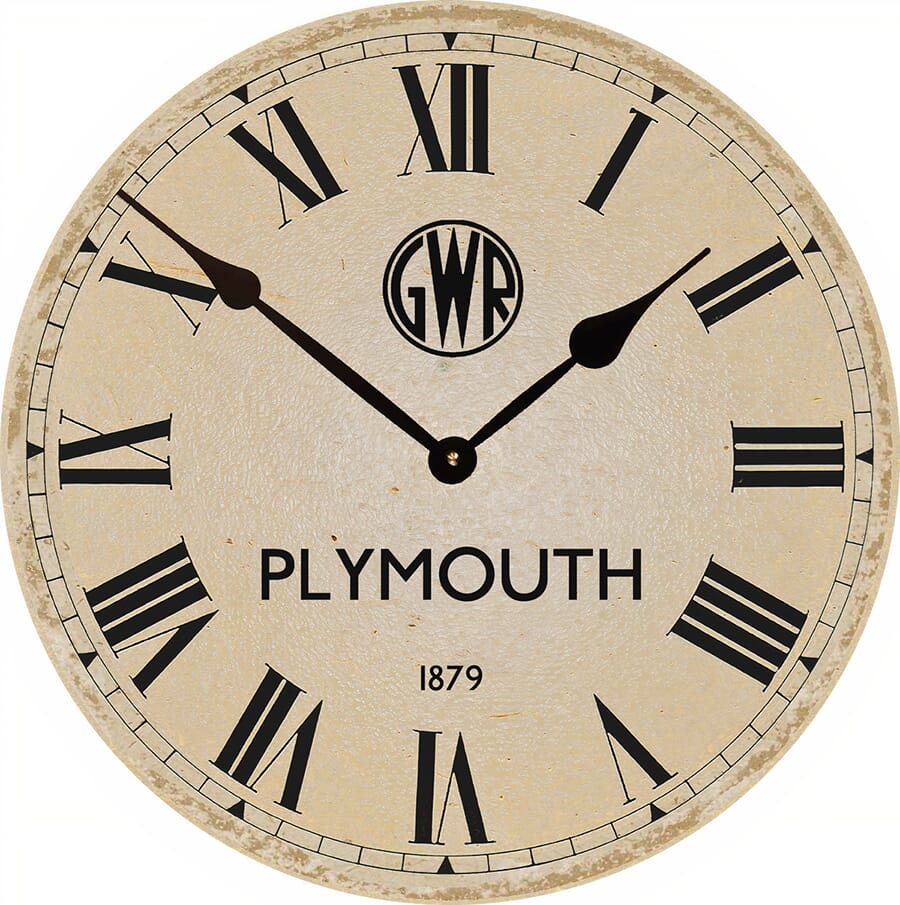
Our metal clocks all feature . . .
• Uncompromising quality — Crafted with superior materials to stand the test of time.
• Authentic vintage look — The dial is metal to replicate the original. It’s individually printed through a special high temperature process resulting in a subtly distressed face that creates a timeworn feel. Produced without a case, this stripped-back, on-trend look suits modern interior design.
• Period-accurate details — Carefully researched details and date are complemented by elegant metal hands faithful to the era.
• Precision quartz movement — A high-torque, battery-powered mechanism with a 2 year warranty ensures reliable timekeeping.
• Made to order — please allow a 14 day delivery time from your order date.
• Personalisation Service — for a small extra charge we can make it truly unique to you! See Details . . .
Plymouth Station Early History (1830s – 1850s)
The history of Plymouth railway station dates back to the early 19th century. The first station in the city opened in 1841, on the site of the current station, as part of the Great Western Railway (GWR) company network as featured on the clock. Initially, it was a terminus station designed to handle trains coming from London and the west of England. This was to change with the construction of the iconic Royal Albert Bridge, designed by the famous engineer Isambard Kingdom Brunel. This iconic bridge spans the River Tamar between Saltash (Cornwall) and Plymouth (Devon). It was completed in 1859 and remains one of the most impressive feats of Victorian engineering.
The bridge is a vital part of the railway line connecting the two counties and features a striking design, with its arched structure and sweeping spans. It was the first bridge of its kind to be made from wrought iron and stands as a testament to Brunel’s innovative approach to engineering.
Expansion and Growth (1850s – 1900s)
As Plymouth grew in importance, so did the railway station. The station underwent major expansion to accommodate increasing traffic and to cater to the growing needs of both passengers and freight. The station became a key transport hub, especially for people traveling to and from Cornwall.
In the late 19th century, a new station building was constructed, providing better facilities. The expansion of the station and rail lines also helped develop Plymouth’s maritime and naval industries, which were central to the city’s economy.