
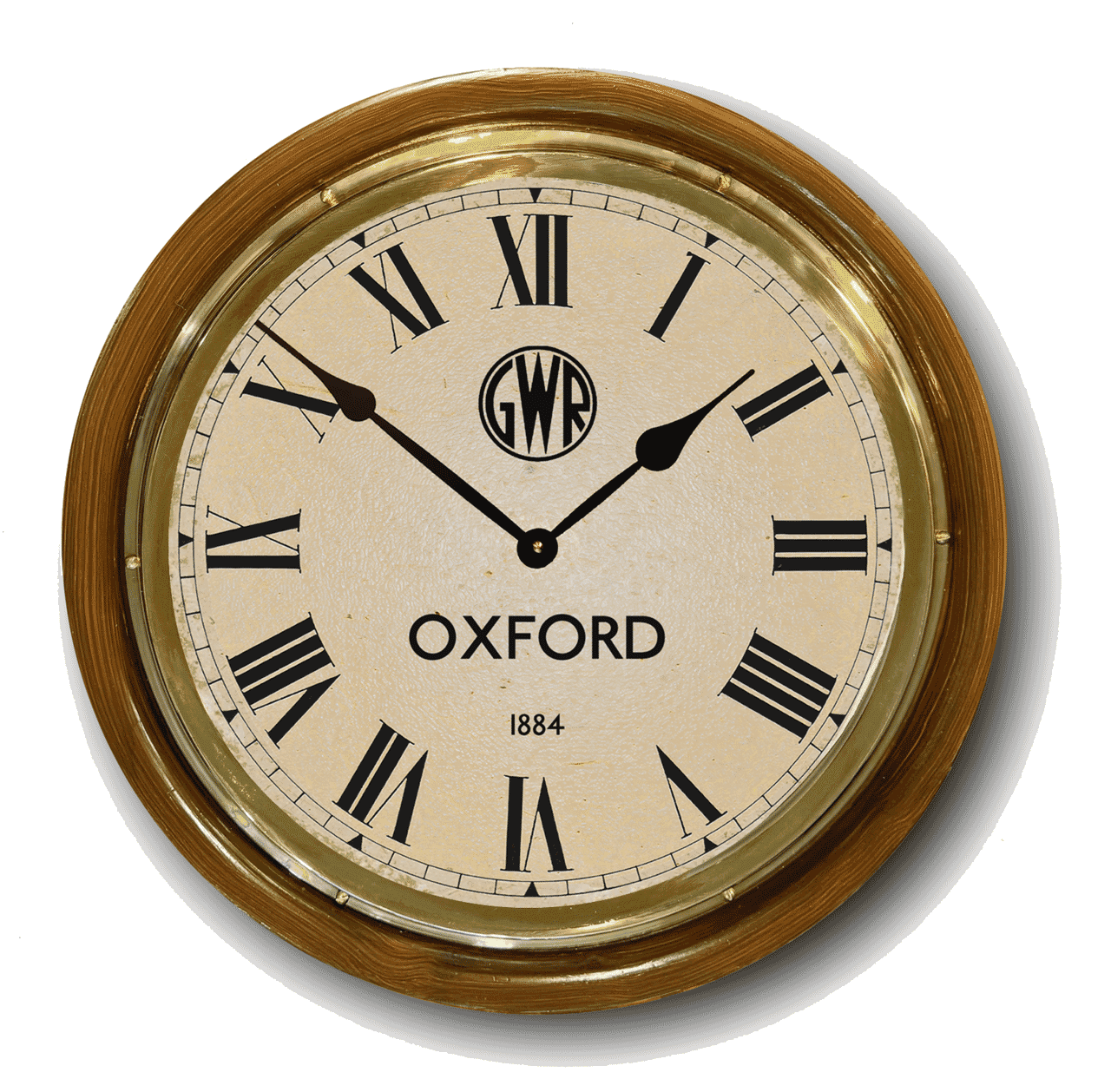
Traditional railway character, individually made for your home.
A closer look at the Oxford Railway Station Clock. Click the photograph to enlarge.
UK delivery £4.95 per order · International delivery calculated at checkout.
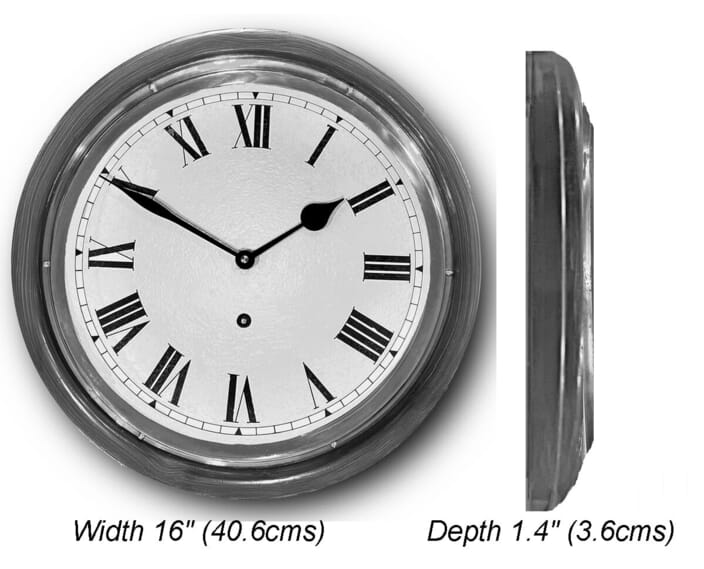
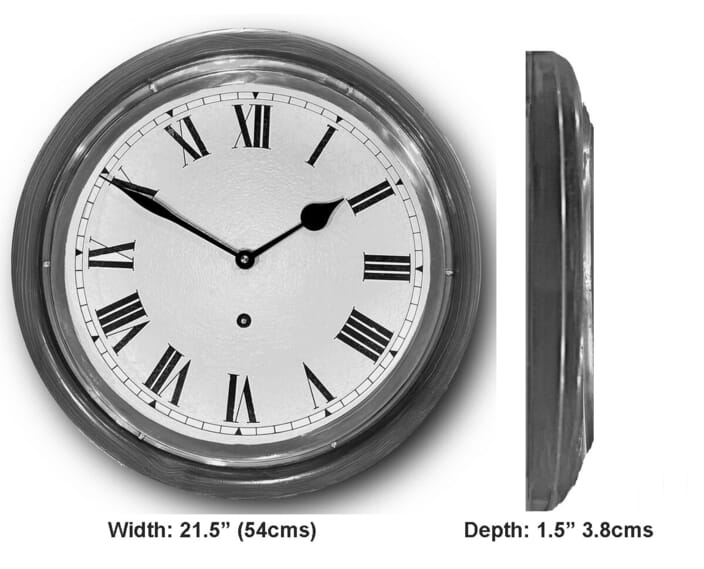

Image Courtesy Oxford University
New Station in 1852: By 1852, the need for a more substantial station became apparent. A new building was constructed closer to the city centre, designed in the Victorian style, which was popular for railway stations at the time. This design featured elements typical of the era, such as brickwork, gabled roofs, and large arched windows. The station reflected the growing importance of Oxford as a centre for both education and commerce.
Italianate Influence: The design of the 1852 station is often thought to have been influenced by the Italian style, which was common in Victorian railway stations. Features included decorative arches, cornices, and elegant stonework. The use of red brick was typical of the period, and the station building was symmetrical, with a grand central structure and smaller wings to either side.
Platform Canopy: The station was also equipped with a large, iron and glass canopy over the platforms. This was a common feature for Victorian railway stations, as it offered shelter for passengers while allowing natural light to filter through the structure. These canopies were designed using wrought iron, an important material for railway architecture at the time.
Post-War Refurbishments: After the Second World War, as was the case with many railway stations across Britain, Oxford underwent some modernisation. The original Victorian station building, despite its grandeur, began to show signs of wear and was no longer able to meet the increasing demands of rail travel. In the 1960s, the station was demolished and replaced with a more modern structure that reflected the changes in architectural taste of the time.
Mid-20th Century Modernism: The 1960s and 1970s saw an emphasis on modernisation in railway station design. Oxford's new station building, opened in 1968, was designed with clean lines and more utilitarian materials, including concrete, steel, and glass. The design was functional, with a focus on maximizing space and improving flow for passengers. This modernist style was in contrast to the ornate Victorian designs that preceded it, representing a shift towards post-war minimalism.
Platform Changes: During this period, platforms were expanded and made more accessible. Canopies were updated, with some metal structures replacing the old Victorian iron and glass canopies. This represented the changing demands of train travel, as trains became faster and more frequent, requiring changes to platform layout and design.
21st Century Renovations: The most recent developments at Oxford Railway Station have been aimed at improving accessibility and updating the facilities while respecting its historical character. In the 2010s, a significant renovation project began to update the station’s infrastructure. The new designs have incorporated elements of modern architecture while preserving the station’s historical significance.
Integration of Modern Elements: The recent rebuild introduced with the use of glass and steel, creating a more airy, welcoming environment for travellers. Modern retail spaces, waiting areas, and improved access for people with disabilities have been integrated into the station’s design.
Sustainability and Energy Efficiency: As with many contemporary projects, sustainability became a focus. Energy-efficient lighting, solar panels, and other eco-friendly elements were incorporated into the station's renovation to make it more environmentally conscious.
Oxford Railway Station is a fine example of how a transportation hub can evolve architecturally over time. The combination of Victorian craftsmanship, modern practicality, and contemporary sustainability showcases the station’s ability to adapt to the changing needs of passengers while respecting its historical roots. Today, it stands as both a transportation centre and a significant architectural landmark, linking Oxford’s rich academic and cultural heritage with the fast-paced world of modern travel.
 Stripped Back Faces
Now available from The Old Clock Company.
View the uncased clock →
Read more clock testimonials →The clock arrived safely today and is already up on the wall. And I'm very happy to be the owner of this fine piece of craftsmanship. It's just perfect!
Looking for a particular railway station, choosing a size or finish, or planning a personalised clock? We’re happy to help.
Contact Us