

Traditional railway character, individually made for your home.
A closer look at the Luton Railway Station Clock. Click the photograph to enlarge.
UK delivery £4.95 per order · International delivery calculated at checkout.
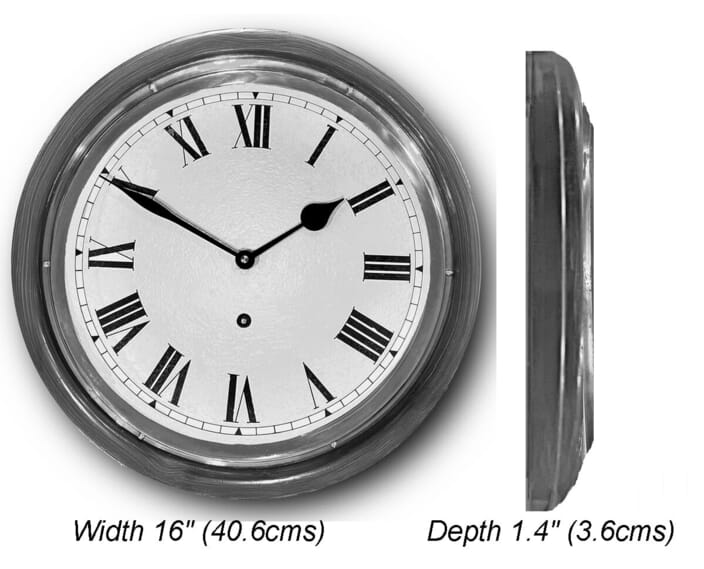
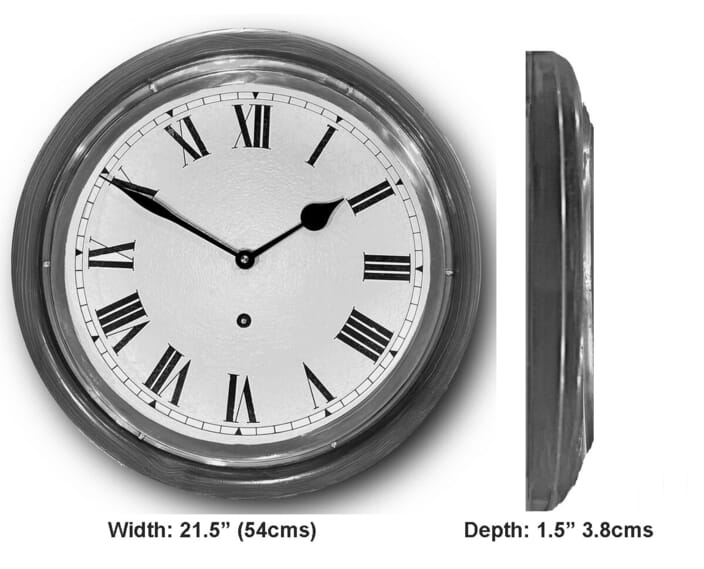
The historically correct substantial case provides further authenticity to the design, complemented by a protective glass lens secured by a traditional solid brass bezel.
Available in Medium 16″ and Large 21.5″, in Hand Grained or Black finish. Made to order in the UK.
Luton Railway Station, which opened in 1868, was built by the Midland Railway Company incorporated in 1846 the date we feature on the clock face, as part of the expansion of the Midland Main Line, connecting London St Pancras to the Midlands and the North of England. At the time, Luton was emerging as an important industrial centre, particularly in hat-making, a trade that had flourished in the town for centuries. The arrival of the railway provided a crucial boost to the local economy, facilitating the faster transportation of goods, improving access for workers and businesses, and making passenger travel more efficient.
Luton Station c.1910

Photograph Courtesy Luton Heritage Forum
The Midland Railway viewed Luton as an important location on its new route between Bedford and London, offering an alternative to the existing services provided by the existing London and North Western Railway. The station initially featured two platforms, a small station building, and a goods yard designed to handle freight, particularly the hats and straw materials that the town was famous for. Early train services primarily connected London with the Midlands, but local services also linked Luton with nearby towns. The completion of St Pancras Station in the same year made Luton an important stop on a direct route to the capital.
As the town’s population grew and industry expanded, passenger numbers increased, prompting the need for station improvements. By the late 19th century, additional sidings and goods-handling facilities had been introduced to accommodate rising freight demands, driven not only by the hat industry but also by Luton’s growing engineering sector. The town’s proximity to London contributed to its development as a commuter hub, leading to an expansion of passenger services.
Over the years, the station continued to evolve, reflecting the town’s increasing importance in the region. Its role in supporting both industry and passenger travel solidified its place in Luton’s history, paving the way for modernization efforts in the 20th century and its eventual integration into an electrified railway network.