

Traditional railway character, individually made for your home.
A closer look at the Derby Railway Station Clock. Click the photograph to enlarge.
UK delivery £4.95 per order · International delivery calculated at checkout.
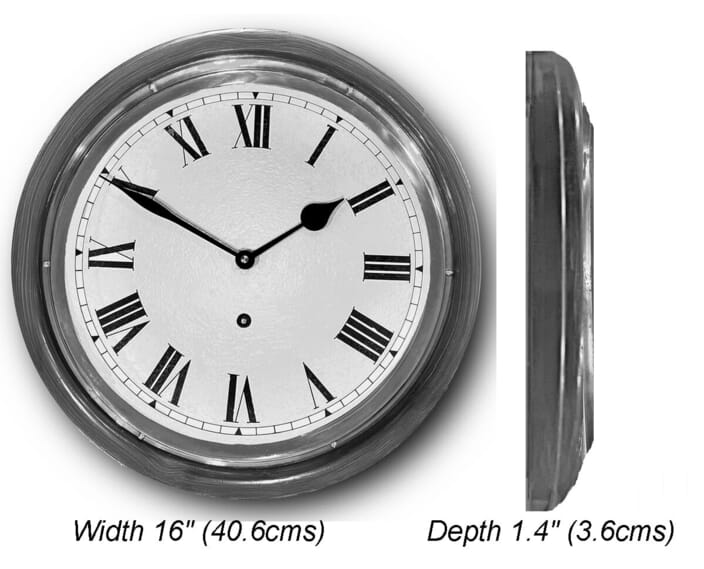
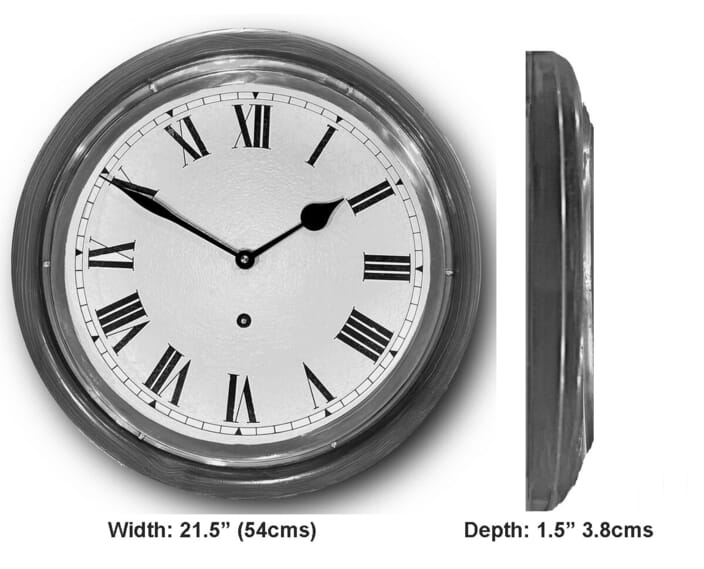
The historically correct substantial case provides further authenticity to the design, complemented by a protective glass lens secured by a traditional solid brass bezel.
Choose Medium 16″ or Large 21.5″, in Hand Grained or Black finish. Made to order in the UK.
A short history of Derby’s railway history.
The station opened in 1856, with several improvements over its first decade, being extended three times in 1860, 1867 and 1868. But there’s so much more to Derby’s railway legacy, especially when you consider how its industrial heart was built around the railways. The formation of the Midland Railway in 1844 not only led to the expansion of railway networks but also created an industrial hub right in Derby. As one of the key railway workshops, Derby’s engineering influence spread across the country. The city became a central player in the manufacturing of locomotives, which was essential for the growth of Britain’s transport infrastructure in the 19th and early 20th centuries.

Derby Station in the early 1900's
The railway's role in the wider industrial revolution can't be overstated either. Beyond just transportation, it played a huge part in fuelling the growth of other industries like coal, steel, and iron—especially in the Midlands. The Midland Railway’s huge influence in the British Isles, from Carlisle to London, made Derby one of the most significant cities in the country when it came to engineering and manufacturing. You can still see echoes of that legacy today, with sites like the Derby Silk Mill museum, which offers a deep dive into the city’s industrial past.
The fact that Derby remained a major railway hub even after the railway groups were merged in 1923, and later under British Railways, reflects how integral the city was to the country’s transport network. That persistence is also seen in how the city adapted over the decades—through nationalisation, the Beeching cuts, and even privatisation. The preservation of the Midland Railway’s history, with sites like the Midland Railway Centre and Peak Rail, allow future generations to connect with the past and understand how railway development shaped the social and economic fabric of Derby and give visitors the opportunity to experience what it was like to travel on the lines that helped build Derby’s industrial notable strength.