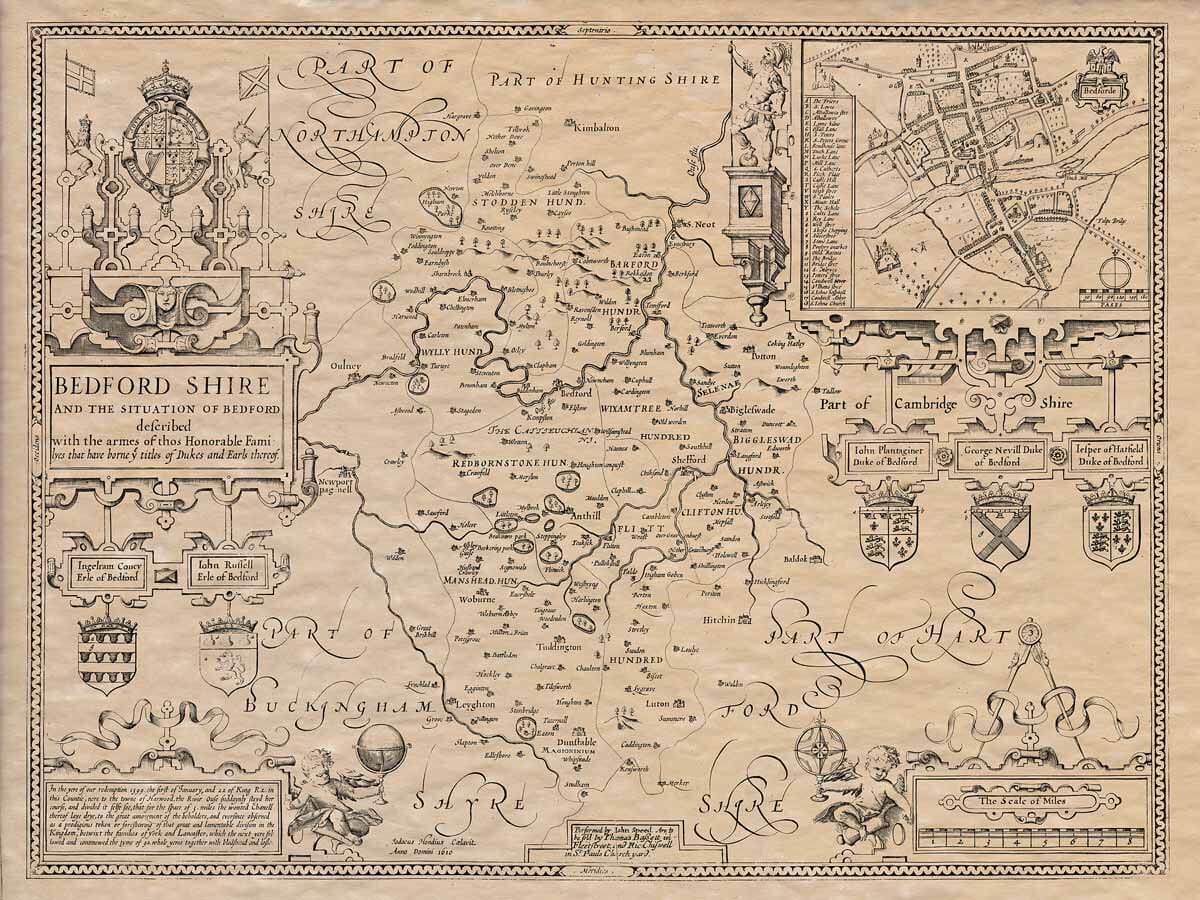
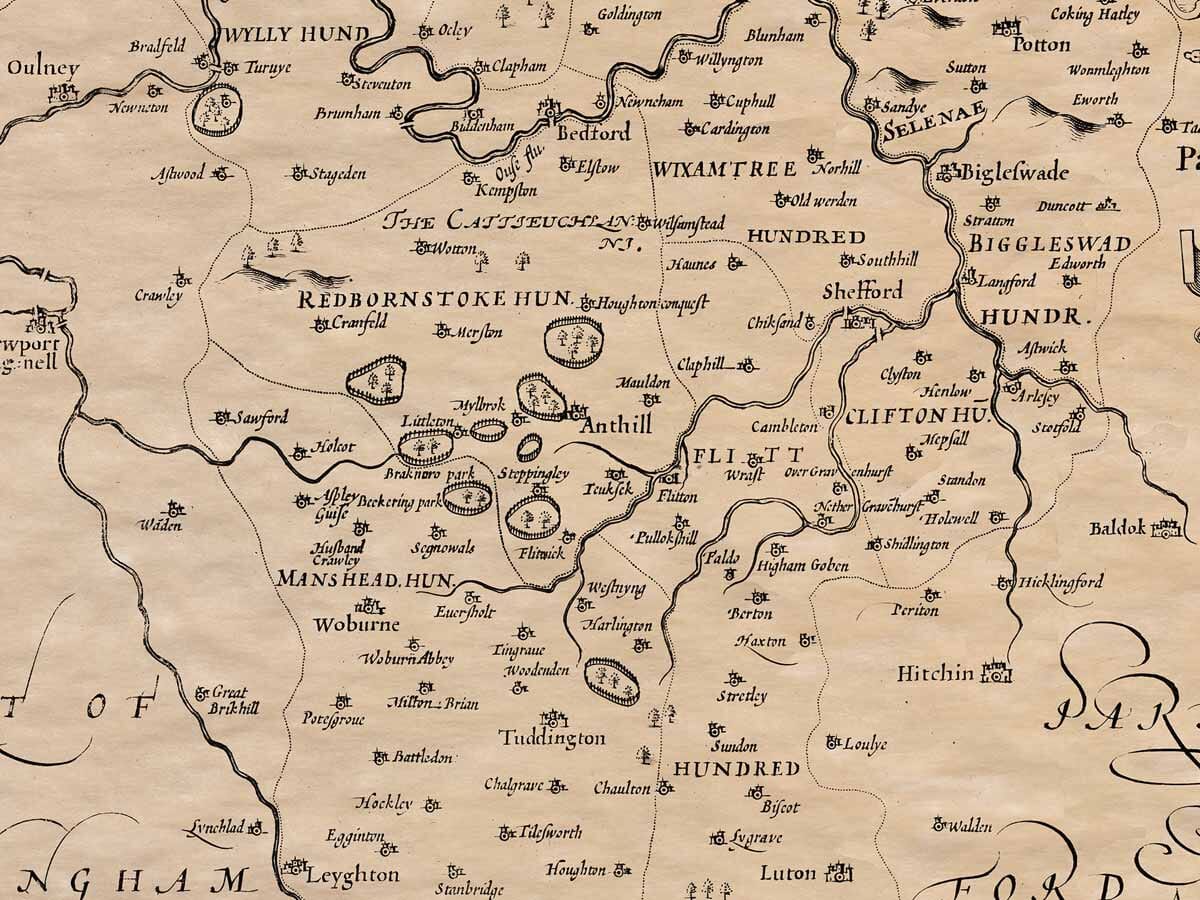
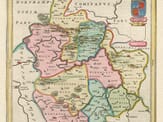
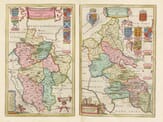
John Speed added a notes to the rear (the verso) of his old maps, Below is a translation into modern English which makes an interesting historical snapshot of
BEDFORDSHIRE in the 1600’s
The Description of BEDFORD-SHIRE
(CHAPTER XXI in the atlas.)
(1) Bedford-shire, located in the southeast of this island, is a plain and open (champion) country. It is bordered:
On the north by Huntington-shire On the east by Cambridge and Hertford shires On the south by Hertford and Buckingham-shires On the west by Buckingham and Northampton-shires
(2) The shape of the county is somewhat oval and not very large: from Tilbrook in the north to Studham in the south is about 20 English miles; and from Turvey in the west to Hatley Cocking in the east, it’s about 14 miles — making the circumference roughly 70 miles.

(3) The air is temperate, and the soil bountiful — especially in the north, where the River Ouse flows through many winding paths.
The south is more barren and produces less, but it still yields good barley, which isn’t easily surpassed elsewhere. Generally, this county is fertile and fruitful, though some places are sprinkled with pasture and woods.
(4) The ancient inhabitants, known to the Romans, that lived in this shire were part of the Cattieuchlani, a strong and warlike tribe. Later they came under Roman control when Caesar brought Britain into a Roman province. His legions stationed at Salena and Magintum — now Sandy and Dunstable, notable Roman sites in the county.
Afterwards, when the Saxons sought to reclaim the land, they took it from the Britons under Cuthwulf, a West-Saxon leader, around the year 572, and the Mercians later held it as part of their kingdom.
(5) In the year 1399, during the wars between the Princes of Lancaster and York, the River Ouse near Newport Pagnell suddenly dried up and wouldn’t flow further — revealing the very depth of its channel. Afterward, it returned as strongly as ever, which was seen as a sign of future political upheaval.
(6) The county suffered heavily during the Danish invasions. The Danes occupied the area. During King Stephen’s reign, the town and castle were seized by Empress Maud, and much blood was shed. In King John’s time, the people rebelled, and later King Henry III destroyed the castle entirely.
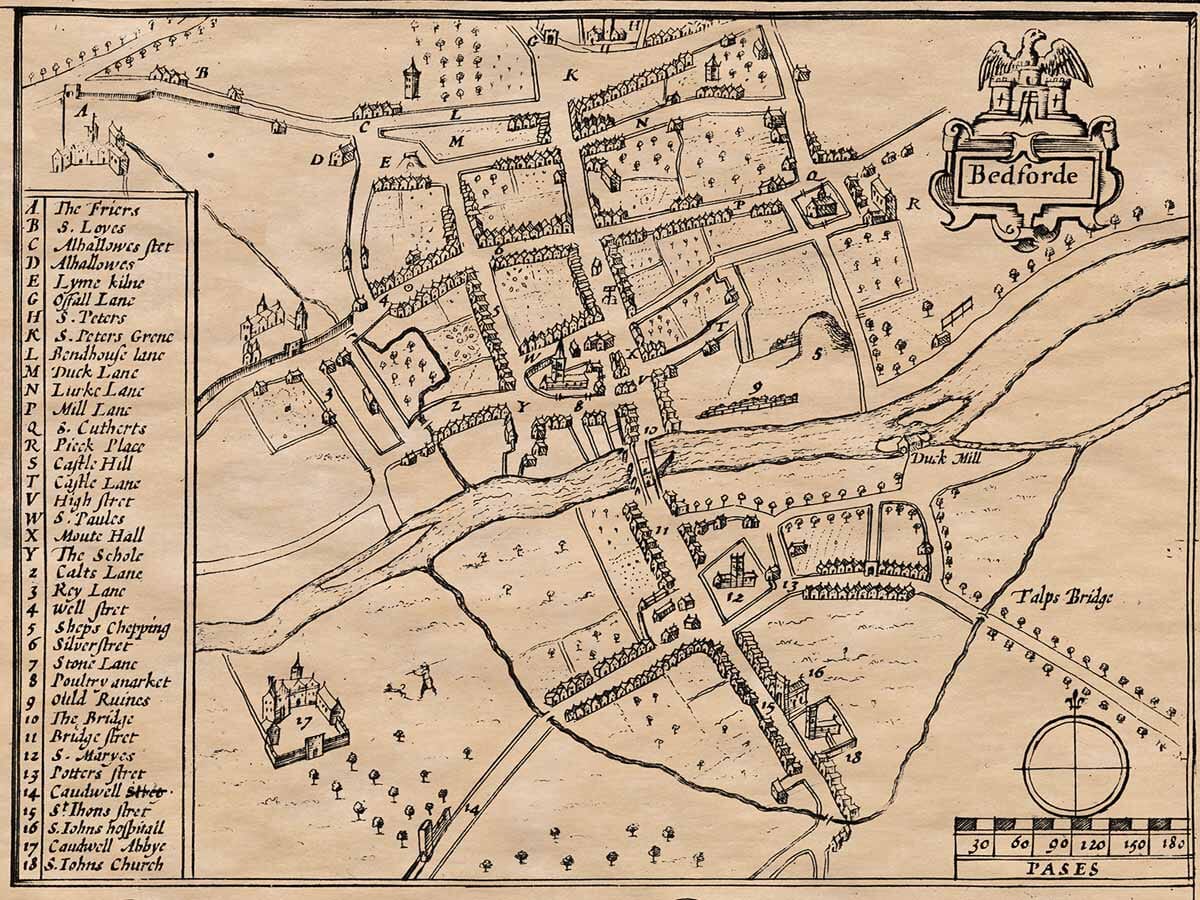
(7) The town of Bedford, the county capital, was once called Lettidur by the Britains and Bedford by the Saxons. It is the most important town in the county, named after the River Ouse and pleasantly located. A stone bridge crosses the river in the middle of town. There are two gates to lock it, which could stop traffic in times of trouble.
Notable places include:
St. Leonard’s Hospital for Lazars
Churches of St. John and St. Mary
The town’s parish churches: St. Cuthbert, St. Peter, St. Loyes, Allhallows, and Cardinal’s Abbey
Former Chapel of King Offa, where his body was supposedly buried after being swept away by the river. A piece of lead (said to be his tomb) was once found, though others say it was not his.
(8) Dunstable has a tale of a robber named Dun, punished by King Henry I, but it is more likely that it was a Roman town, as it had Roman legions. A nearby village is still called Maiden-mongery, showing the Roman influence.
(9) Important castles in the shire include:
Woodhill, Eaton. Tempsford and Ampthill
Ampthill was once held by the Crown, and many relics and devotions were offered there. These were destroyed during King Henry VIII’s reign when many shrines were demolished.
(10) Geography:
The town of Bedford lies 52 degrees and 30 minutes north latitude, and about 16 minutes west of the Prime Meridian.
(11) Notable noble families bear the titles of Dukes and Earls. The shire is divided into nine Hundreds (districts), with seven Market Towns and 156 parish churches.
Bedfordshire Place Names
Ampthill
Arlesey
Aspley Guise
Astwick
Barford, Great
Barford, Little
Barton-Le-Clay
Battlesden
Bedford
Biddenham
Biggleswade
Billington
Blunham
Bromham
Caddington
Campton
Cardington
Carlton & Chellington
Chalgrave
Clapham
Clifton
Clophill
Colmworth
Cockayne Hatley
Cople
Cranfield
Dean
Dunstable
Dunton
Eaton Bray
Eaton Socon
Edworth
Eggington
Elstow
Eversholt
Everton
Eyeworth
Felmersham
Flitton
Flitwick
Goldington
Gravenhurst
Harlington
Harrold
Haynes
Heath & Reach
Henlow
Higham Gobion
Hockliffe
Houghton Conquest
Houghton Regis
Hulcote
Husborne Crawley
Kempston
Kensworth
Keysoe
Knotting
Langford
Leighton Buzzard
Lidlington
Luton
Marston Moretaine
Maulden
Melchbourne
Meppershall
Millbrook
Milton Bryan
Milton Ernest
Northill
Oakley
Odell
Old Warden
Pavenham
Pertenhall
Podington
Potsgrove
Potton
Pulloxhill
Ravensden
Renhold
Ridgmont
Riseley
Roxton
Salford
Sandy
Sharnbrook
Shefford
Shelton
Shillington
Souldrop
Southill
Stagsden
Stanbridge
Staploe
Staughton, Little
Steppingley
Stevington
Stondon, Upper
Stotfold
Streatley
Studham
Sundon
Sutton
Swineshead
Tempsford
Thurleigh
Tilsworth
Tingrith
Toddington
Totternhoe
Turvey
Westoning
Whipsnade
Wilden
Willington
Wilshamstead
Woburn
Wootton
Wrestlingworth
Wymington
Yielden
Aley Green
Apsley End
Backnoe End
Basmead Manor
Batts Ford
Beadlow
Beckerings Park
Beeston
Beeston Green
Beggary
Bell End
Bidwell
Great Billington
Lower Billington
Birchmoor
Biscot
Black Tom
Bolnoe
Boot End
Bott End
Boughton End
Bourne End
Bramingham
Breach
Broad Green
Brickhill
Bridge End
Brook End
Brook End Green
Broom
Budna
Bury End
Bury Park
Bushmead
Cainhoe
Lower Caldecote
Upper Caldecote
California
Caulcott
Causeway End
Chadwell End
Chalton
Channels End
Chapel End
Chaul End
Chawston
Chicksands
Chiltern Green
Church End
Clapham Folly
Clapham Green
Clipstone
Coffle End
Colesden
Colworth
Cotton End
Crawley
Crawley Green
Cross End
Crosshall
Deadmans Cross
Denel End
Dilwick
Duck End
Ducksworth
Duloe
East End
Eastcotts
Eaton Ford
Eaton Green
Elms Farm
Elvedon
Etonbury
Faldo
Fancott
Felmersham Hardwick
Fenlake
Flexmore End
Folly
Gastlings
Girtford
Goldington Highfields
Gossards Green
Goswell End
Greathampstead
Green End
Greenfield
Grovebury
Hall End
Hanscombe End
Hardwick End
Harlington Woodend
Harrowden
Hart Hill
Hatch
Hatch End
Heath
Herrings Green
High Town
Higher Berry End
Higher Rads End
Hillfoot End
Hills End
Hinwick
Holme
Holwellbury
Honeydon
Houchens End
Upper Houghton Regis
How End
Humbershoe
East Hyde
West Hyde
Ickwell
Ickwell Green
Ion
Ireland
Keeley Green
Keeley Lane
Kempston Church End
Kempston Hardwick
Kempston West End
Keysoe Row
Kitchen End
Knotting Green
Langford End
Leagrave
Lewsey
Limbersey
Limbury
Little End
Littleworth
Lower Bury End
Lower East End
Lower End
Lower Rads End
Luton Hoo
Marsh Farm
Mavourn
Middle End
Millow
Mogerhanger
Moor End
Mowsbury
Nares Gladley
New Town
Newnham
Newmill End
Newton
North End
Northwood End
Little Odell
Park End
Park Town
Pegsdon
Pepperstock
Potter’S End
Pudde Hill
Queens Park
Radwell
Ramridge End
Reach
Risinghoe
Roothams Green
Round Green
Rowney
Runley
Rushmere
Salford Ford
Salph End
Scald End
Seddington
Segenhoe
Sevick End
Sewell
Sharpenhoe
Sheep Lane
Shefford Hardwick
Shirdon
Shortstown
Silsoe
Silver End
Slip End
Someries
Southcott
Stagsden West End
Stanbridgeford
Stanford
Upper Staploe
Stockwood
Lower Stondon
Stopsley
Stotfold Green
Stratford
Stratton
Upper Sundon
Tags End
Tartlett End
Tebworth
Tetworth
The City
The Creakers
The Green
The Hassells
Thistley Green
Thorn
Thorncote
Thrales End
Thrup End
Tilwick
Tithe Farm
Top End
Tyrells End
Up End
Upbury
Upper East End
Upton End
Valance End
Vicarage Green
Wadlow
Wakes End
Warden Hill
Warden Street
Wardhedges
Water End
West End
Westoning Woodend
Wharley End
Whitnoe
Wick End
Wickey
Wingfield
Witts End
Wood End
Woodmer End
Wootton Bourne End
Wootton Broadmead
Wootton Green
Wootton Pillinge
Workhouse End
Worthy End
Wrest Park
Wyboston