
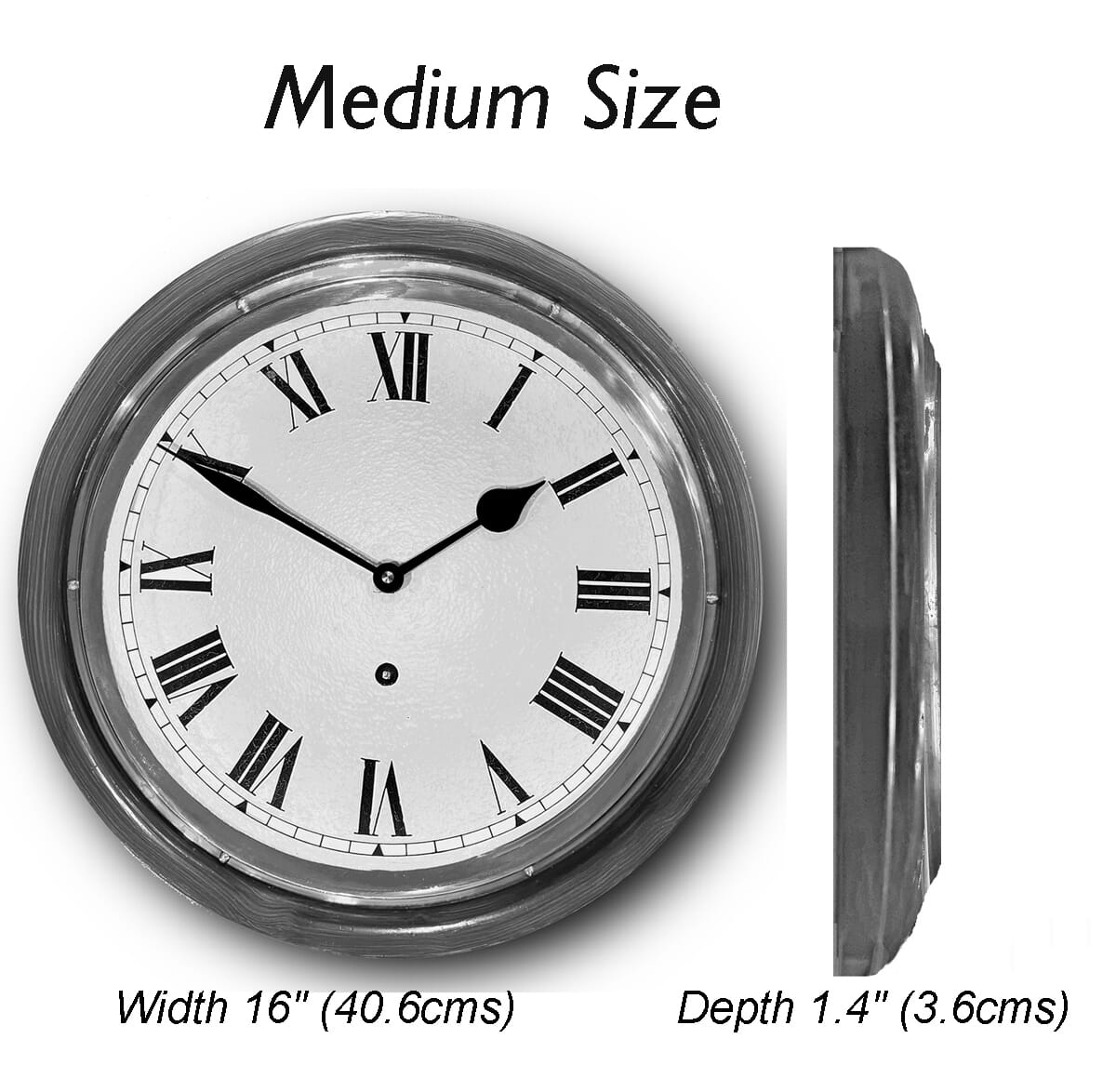
Description
PLEASE NOTE
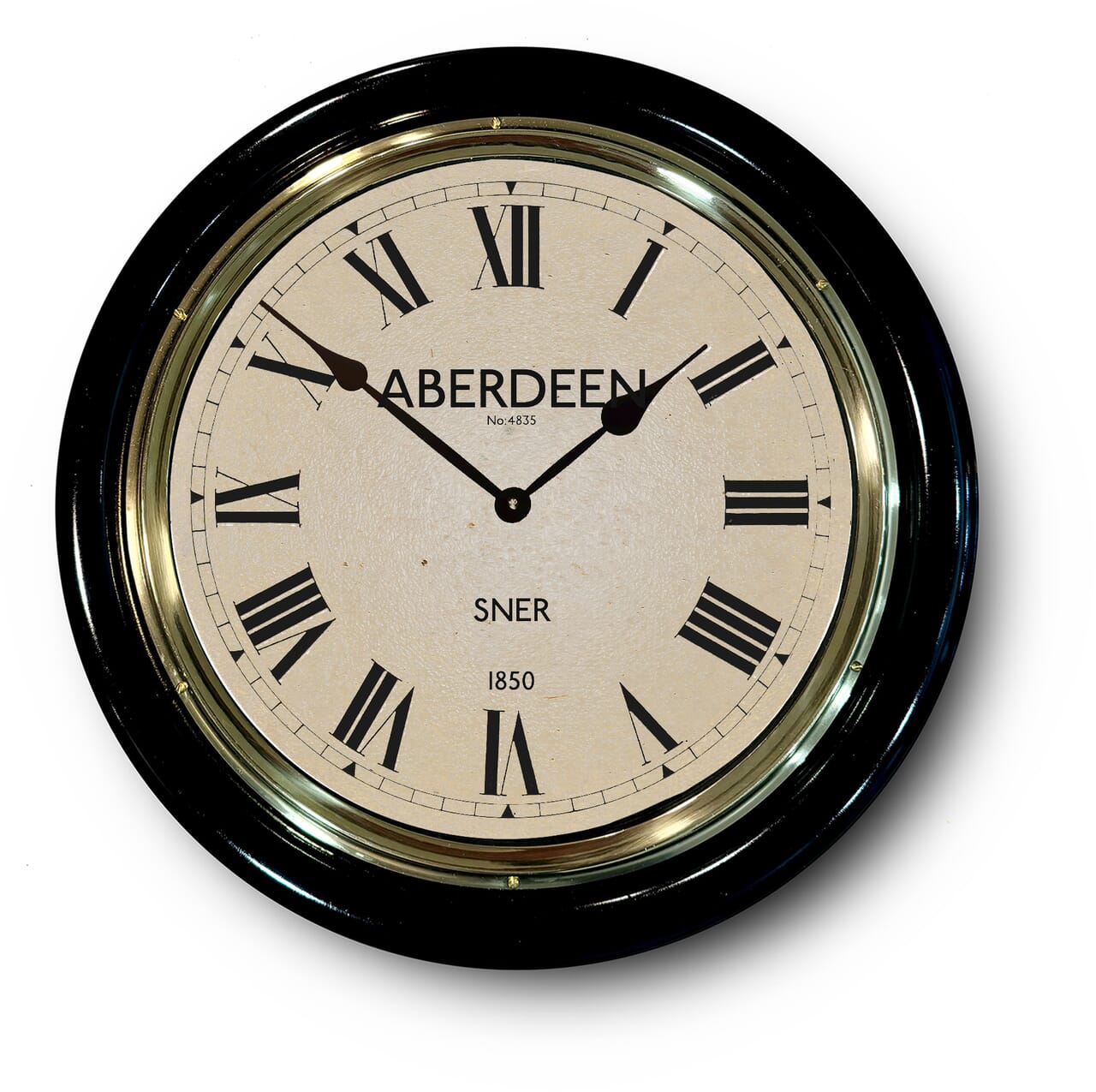
We are a small family operation and each and every clock we produce is made to your individual design choice.
Delivery time is subject to availability.
Current lead time is 2–3 weeks
ORDER NOW TO AVOID DISAPPOINTMENT !
Aberdeen Station: A Historical and Architectural Overview
Aberdeen Station, situated in the heart of Aberdeen, Scotland, stands as one of the most significant transport landmarks in the northeast of the country. Opened in 1867, it has served as the city’s principal railway hub, linking Aberdeen with the rest of Scotland and beyond. Its history is deeply intertwined with the expansion of the railways during the Victorian era, when the need for efficient passenger and freight transport transformed cities across Britain.
The original station was constructed by the Great North of Scotland Railway (GNSR) to consolidate multiple smaller terminals that had previously served the city. Its establishment marked a new era of modernization for Aberdeen, providing a single, integrated point of departure and arrival. Early plans emphasized functionality and grandeur, hallmarks of Victorian railway architecture. The use of durable local granite—a defining material of Aberdeen’s urban landscape—gave the station both strength and aesthetic coherence with the rest of the “Granite City.”
Architecturally, Aberdeen Station reflected the prevailing design philosophies of 19th-century railway construction: a blend of engineering innovation and civic pride. The first structure featured extensive iron and glass roofing, allowing natural light to flood the concourse and platforms, symbolizing transparency and progress. Large arched windows and classical details added to its elegance, while the spacious layout was designed to accommodate increasing traffic from both passengers and goods. The overall style could be described as Victorian industrial with neoclassical influences, combining utility with ornamentation.
Major redevelopment came in the early 20th century, particularly during the 1910s and 1920s, when the station was expanded and modernized to meet growing demand. The redesign, carried out under the direction of the London and North Eastern Railway (LNER), introduced more extensive platform canopies and improved passenger facilities. The façade and station buildings were reworked to maintain architectural harmony with Aberdeen’s granite streetscape. The station’s distinctive blend of ironwork, masonry, and glass remained a central theme, emphasizing durability and lightness in equal measure.
In the post war period, the station continued to evolve. A significant modernization project in the 1970s updated the concourse and ticketing areas, aligning them with contemporary British Rail standards. While some original decorative details were lost during these changes, efforts were later made to preserve and restore key historical features. The 2010s brought further renovations under Network Rail and ScotRail, including improved accessibility, upgraded retail spaces, and restored granite detailing. The introduction of modern materials—such as steel and energy-efficient glass—was carefully balanced with respect for the station’s historic architectural character.
Today, Aberdeen Station serves as both a functional transport hub and a living architectural monument. Its design tells the story of nearly 160 years of urban, industrial, and aesthetic evolution. The interplay of granite solidity and glass openness captures the spirit of Aberdeen itself—resilient, modern, and rooted in history. As one of Scotland’s most architecturally distinctive stations, it continues to embody the city’s identity while adapting gracefully to the demands of 21st-century travel.