Description
The London and North Western Railway was one of the largest and most significant railway companies in the UK during the 19th and early 20th centuries.

The LNWR was established in 1846 following the amalgamation of several smaller rail companies, including the London and Birmingham Railway, the Manchester and Birmingham Railway, and the Shrewsbury and Birmingham Railway. Its creation was a response to the need for greater coordination in Britain’s expanding rail network. The LNWR was one of the first companies to provide high-speed services and was known for its extensive network. It initially connected London to Birmingham, and over time, expanded its routes to serve other major cities such as Manchester, Liverpool, and Wolverhampton.
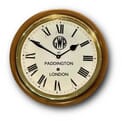
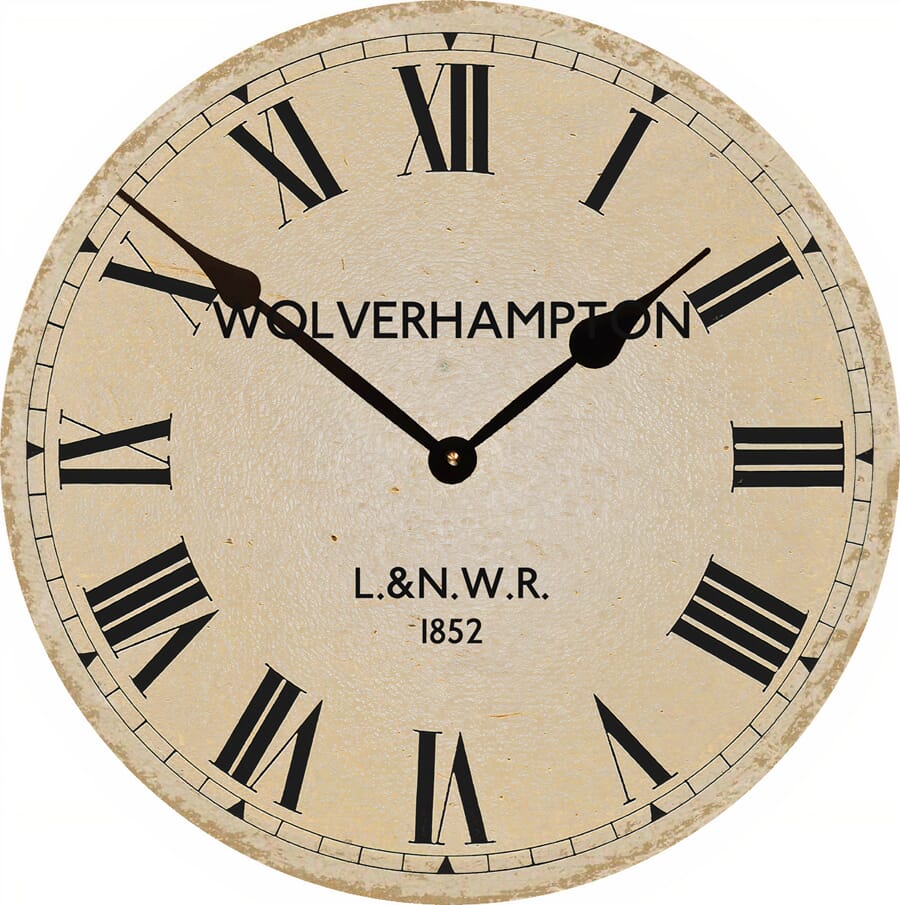
Wolverhampton Queen Street Station (1852): As mentioned in the passage, the Birmingham, Wolverhampton, and Stour Valley Railway, a subsidiary of the LNWR , opened Wolverhampton Queen Street Station on 1 July 1852 as featured on the clock . This station became a central part of the LNWR’s network in the region, helping to strengthen connections between the Midlands and other parts of the country.
Wolverhampton High Level: The original station, which was renamed Wolverhampton High Level in 1885, was part of the infrastructure improvements that the LNWR oversaw to accommodate growing rail traffic. The High Level station offered improved facilities for passengers, as well as more direct connections to London and other cities.

Wolverhampton (Low Level) Station Photograph Courtesy of
Wolverhampton Low Level: In 1854, the Oxford, Worcester and Wolverhampton Railway (OWWR), which was later absorbed by the LNWR, opened the Low Level station. This station provided connections to the south-western parts of England and improved the accessibility of Wolverhampton for both passengers and freight.
The LNWR was known for pioneering some of the early locomotive designs, particularly the “Claughton” and “Precedent” class engines, which were powerful and efficient steam locomotives enabling it to establish some of the most well-organised and punctual passenger services in Britain. The company focused on ensuring its trains were fast, comfortable, and reliable, with innovations in both engineering and customer service. As one of the leading rail companies, the LNWR played a role in the development of early railway safety measures, including improved signaling systems and the widespread use of the block system to reduce accidents and improve efficiency.
In 1923, the LNWR was merged with several other railway companies, including the London and Scottish Railway, to form the London Midland and Scottish Railway (LMS), which became one of the “Big Four” railway companies in the UK. In 1948, after the nationalization of the British railways, the LMS became part of British Railways (later rebranded as British Rail), and the infrastructure that was originally the LNWR was gradually integrated into the national system.
The LNWR had a lasting impact on Wolverhampton’s rail network, both through its direct operations and its involvement in the development of key stations in the area. The Wolverhampton High Level station (now part of the modern Wolverhampton station complex) became an important hub for travelers connecting with major cities like London, Manchester, and Liverpool. The legacy of the LNWR can still be seen in the modern station’s layout, its surrounding railway infrastructure, and in the continued importance of Wolverhampton as a transportation hub within the UK.