



Description

Bristol Temple Meads Station Façade circa 1840
Today Bristol Temple Meads is both a busy working railway station and a monument to Britain’s railway age. Opened in 1840 as the western terminus of the Great Western Railway, it was originally designed by the pioneering engineer Isambard Kingdom Brunel, whose broad-gauge line linked Bristol with London Paddington.
The station quickly became a busy junction, serving lines to Exeter, Gloucester, South Wales and the city’s harbour. As traffic grew, the site was enlarged in the 1870s and again in the 1930s, creating the long, curving platforms and vast train shed that greet passengers today. Much of the complex is now Grade I listed, reflecting its architectural and historic importance.
Beyond its heritage, Bristol Temple Meads is a vital modern transport hub. It is the city’s main station, with frequent services to London, Cardiff, Birmingham and the South West, and links to buses, airport coaches and the nearby harbour ferry.
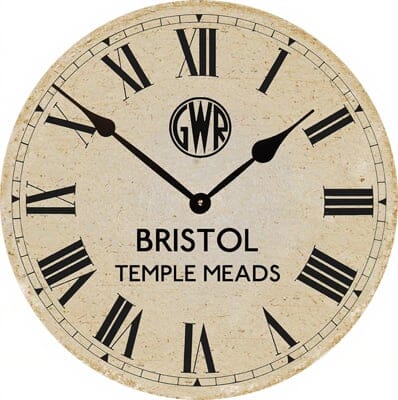
Standing beneath its soaring iron roof or outside beneath the Gothic clock tower, visitors sense both movement and memory: the constant rhythm of arriving trains framed by one of the great set pieces of Victorian railway architecture.