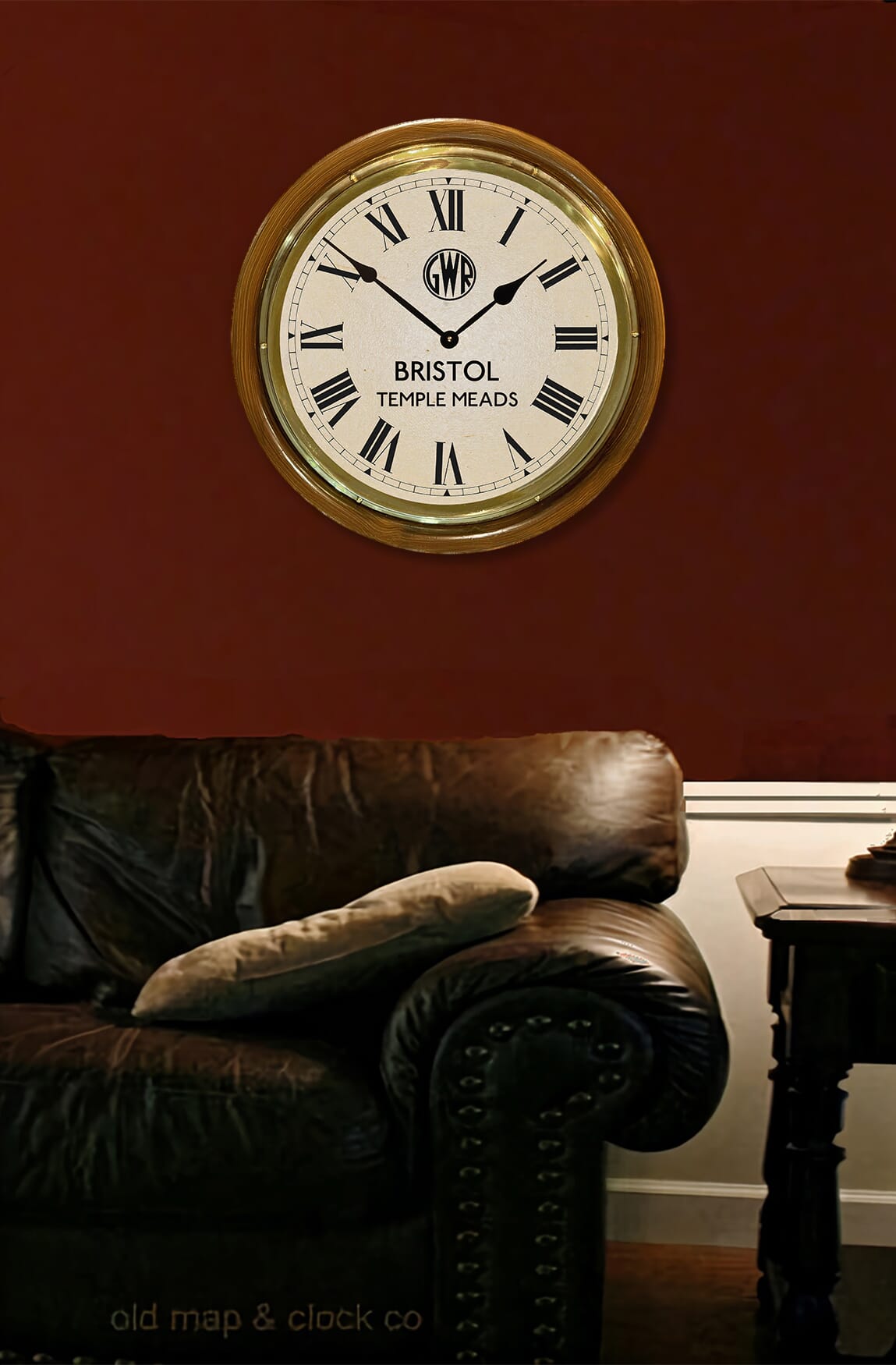
Description
PLEASE NOTE
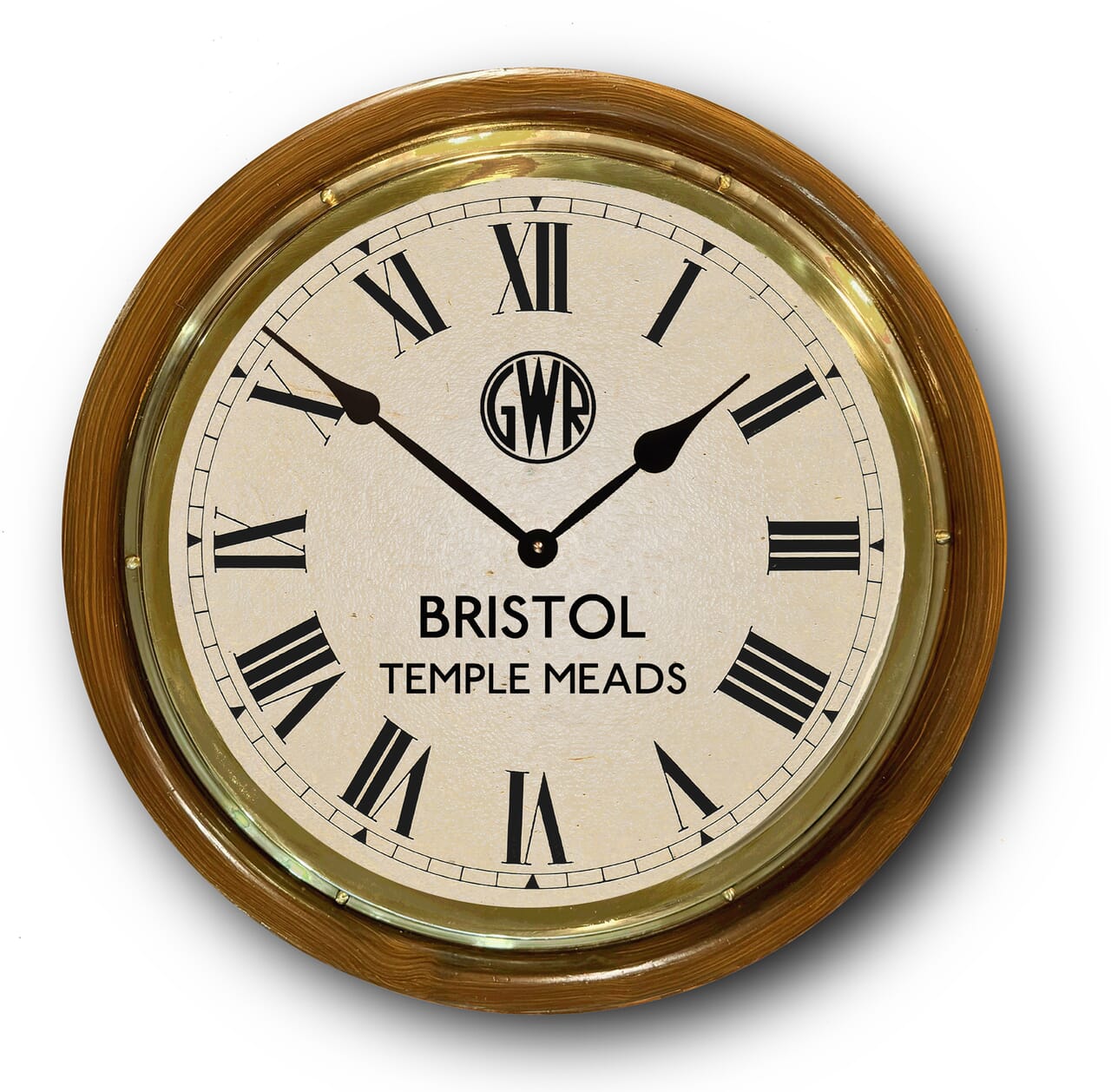
We are a small family operation and each and every clock we produce is made to your individual design choice.
Delivery time is subject to availability.
Current lead time is 2–3 weeks
ORDER NOW TO AVOID DISAPPOINTMENT !
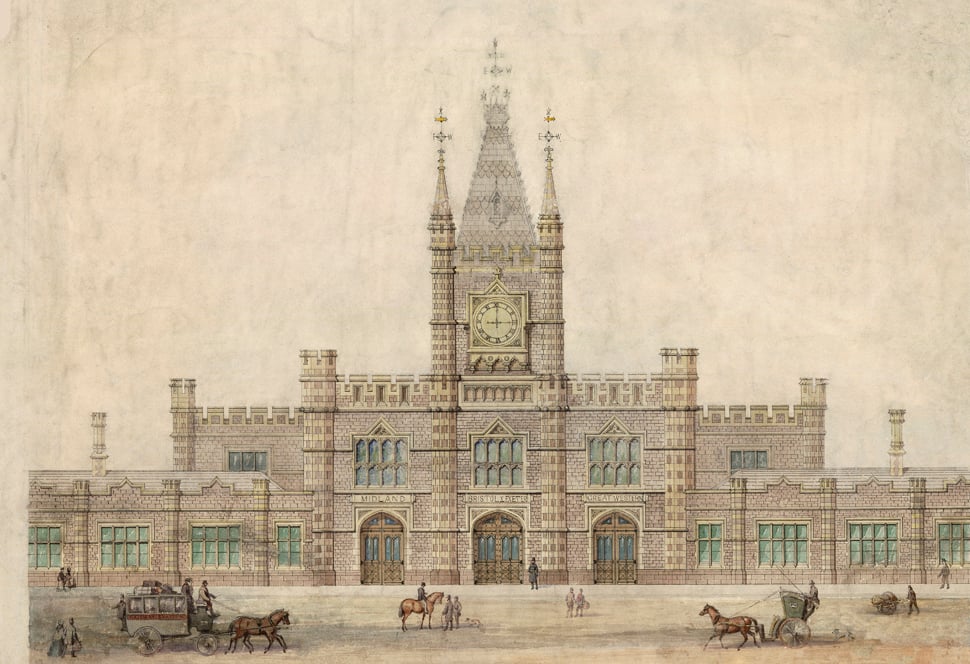
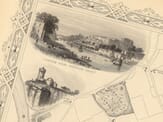
The grand façade of Bristol Temple Meads Station c.1840 by unknown artist.
Bristol Temple Meads station is one of Britain’s great railway set-pieces, a place where engineering ambition and theatrical architecture meet. Opened in 1840 as the western terminus of the Great Western Railway, the original station was designed by Isambard Kingdom Brunel in a romantic “mock Tudor” style, its hammer-beam roof echoing the medieval drama of Westminster Hall. Although that first train shed now hides in plain sight as a car park, you can still sense Brunel’s desire to impress Victorian travellers the moment they arrived in Bristol.
The grand façade most people picture today belongs to the later Gothic Revival station, begun in the 1870s by architect Matthew Digby Wyatt. Tall pinnacled towers, battlements, and traceried windows give the building the air of a city hall or cathedral rather than a mere transport hub. The stone front stretches majestically along the forecourt, a confident statement of Bristol’s status as gateway to the West Country.
Imagine approaching it nearly two centuries ago: no cars, only the rattle of carriages on cobbles, steam drifting over the roof, and that castellated frontage rising above you like a fortress of progress. Electric clocks, iron canopies and gas lamps would have glinted against warm Bath stone, turning every arrival and departure into a small civic ceremony. Temple Meads must have felt astonishing to early passengers, many of whom had never before travelled faster than a horse could gallop.
Even today, softened by time and modern alteration, the station’s architecture still stages a daily spectacle—reminding us that the railway age was meant not just to move people, but to amaze them.