Antique map of Jersey
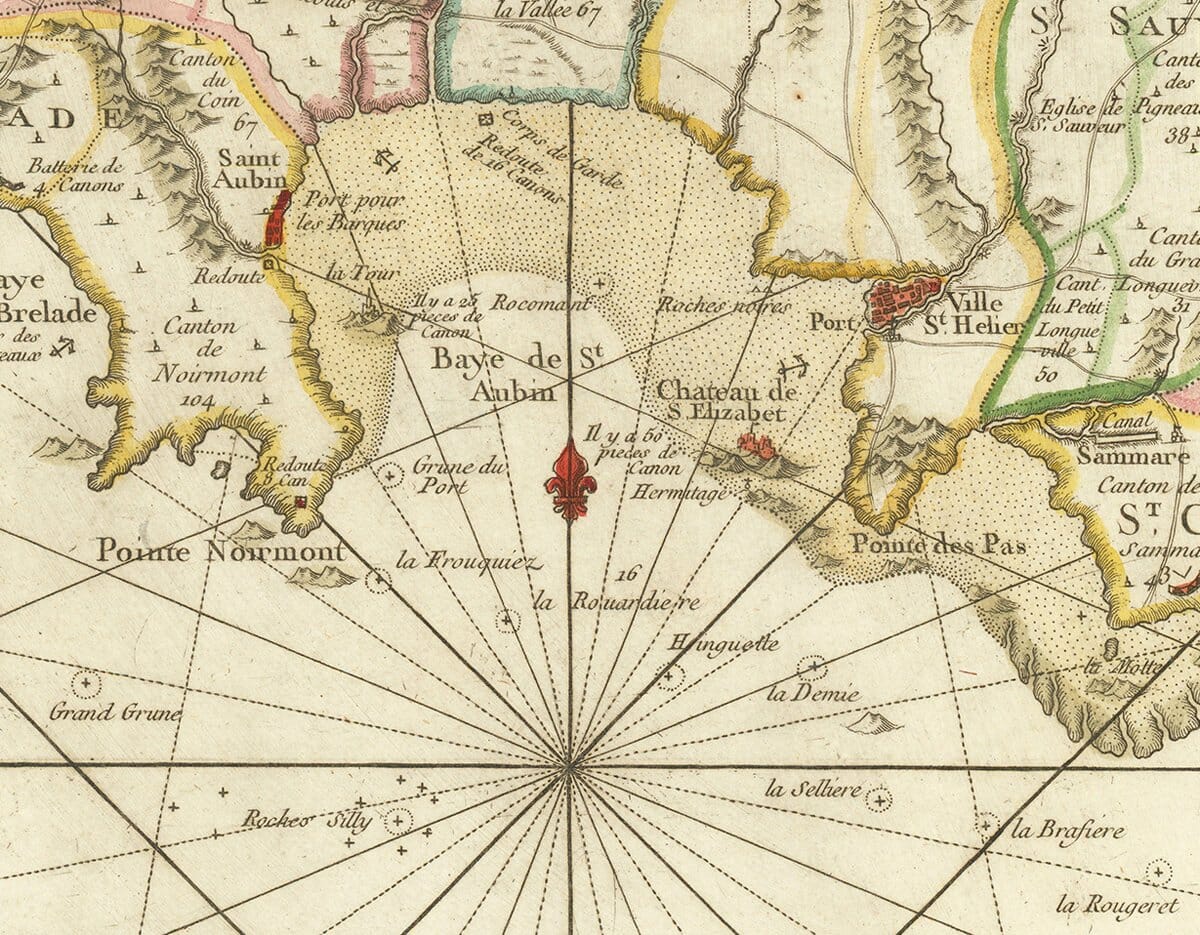
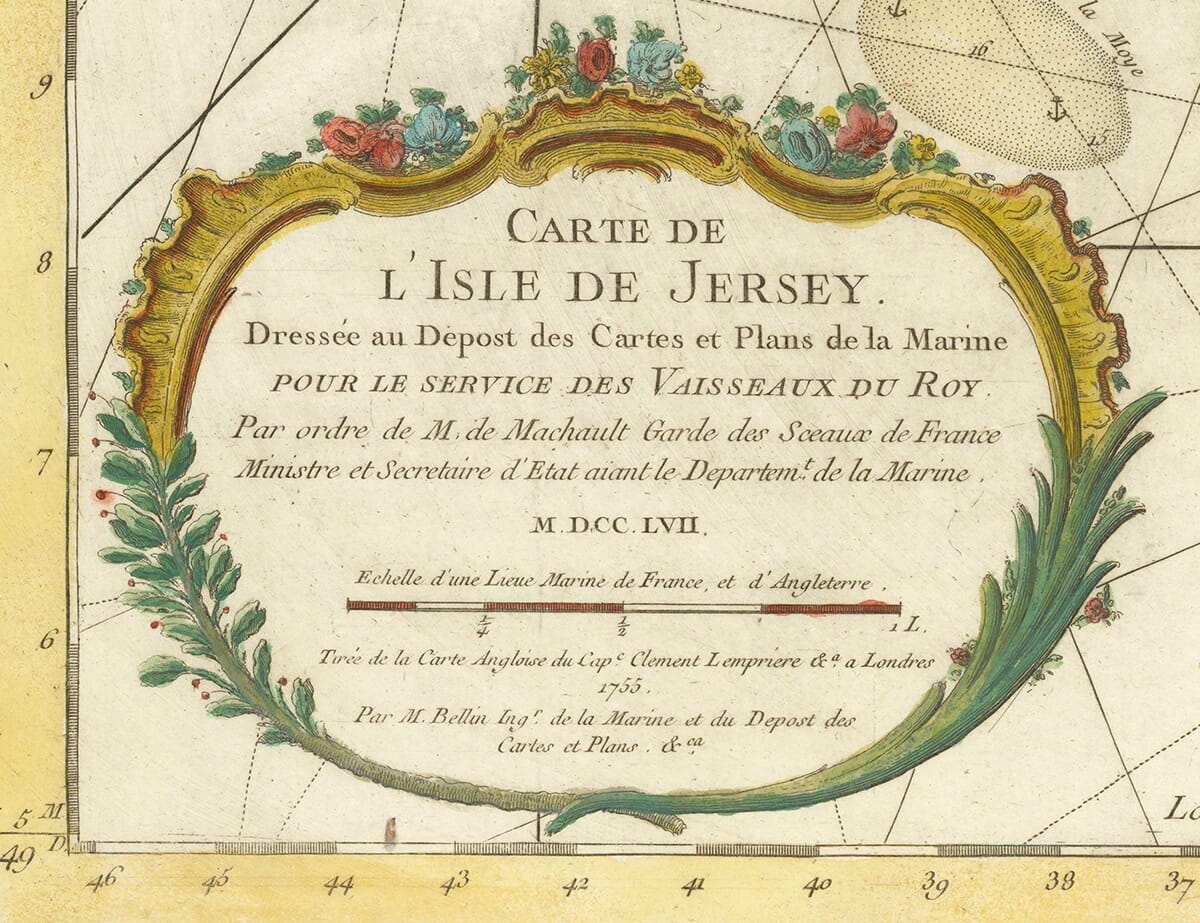
Antique map of Jersey Detail from Jersey Map Detail from Jersey Map the Cartouche

Antique Map of Jersey

Price range: £35.55 through £59.95

Carte de l’Isle de Jersey . . . an Antique Map of Jersey

This elegant eighteenth-century reproduction of an antique map of Jersey is a superb fine-art print, combining beauty, history, and craftsmanship. Rich in detail and colour, it will grace any wall and is especially meaningful for those who live on or cherish the character, heritage, and enduring charm of this wonderful island.
  • Stunning giclée fine art print on authentically aged heavy textured paper
  • 12 Colour printing technology  •  Guaranteed to pass or exceed museum quality standards   •  Free UK Courier Delivery with tracking
Available in three sizes: Large: 24″ x 31″ (78.7 x 61cms)   Medium: 18″ x 24″ (45.5 x 61cms)  Small: 19.5″ x 14″ (49.5 x 35.5cms)
+ read more

A stunning certified FINE ART PRINT on heavy textured art paper — not a poster

  • Direct from the publisher — no middlemen
  • Printed in-house in Cornwall
  • Free UK delivery — international shipping available
  • Produced to meet — and often exceed — museum-quality standards
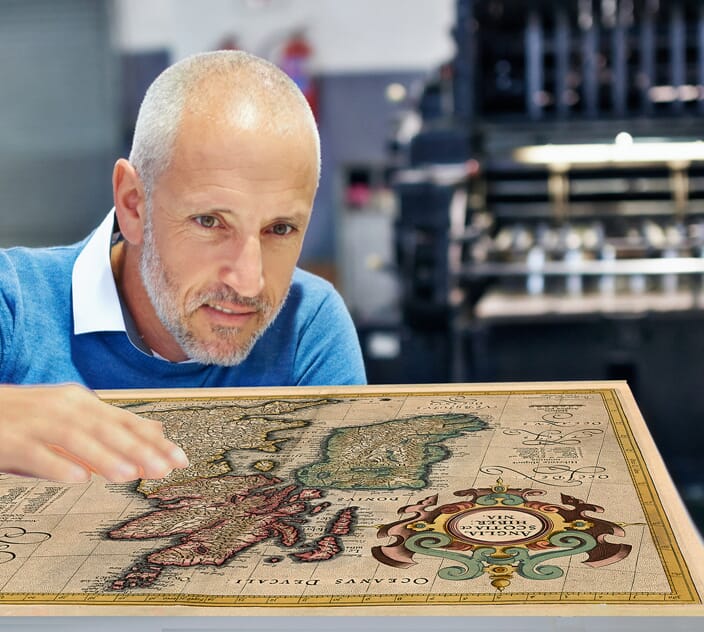
Inspecting Vintage Map Reproduction

Fine Art Map Reproductions – Museum-Quality Printing

Unlike most online offerings, our maps are produced entirely in-house, not outsourced to print-on-demand or drop-shipping services. This allows complete control over quality while offering better value. Each map begins with a high-resolution original, carefully enhanced and printed to order using archival papers and pigment inks for exceptional clarity, depth, and longevity. Every piece is personally overseen — no map leaves our workshop unless it is of a quality we would be proud to display ourselves.

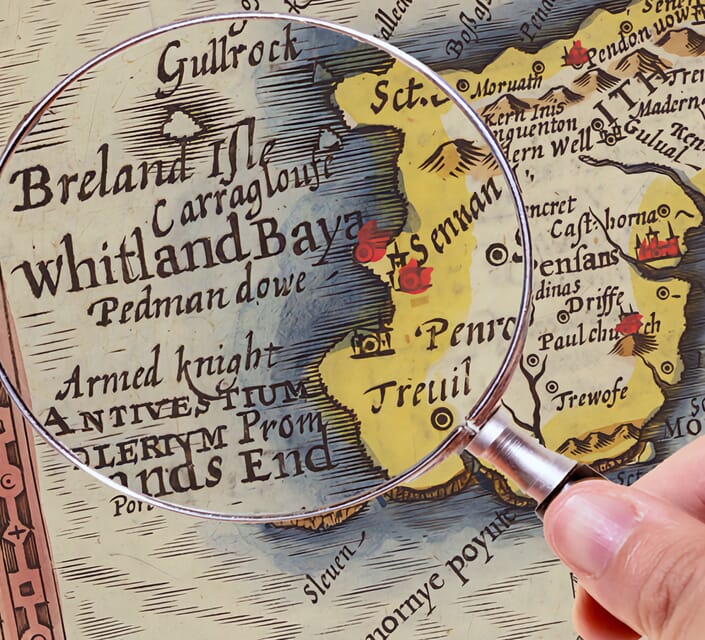
Hand hold a magnifying glass over West Cornwall Map

Authentic Old Map Paper & Accurate Colour Reproduction

Paper choice is essential to the authenticity of our maps. We use specially sourced 190gsm paper made in the UK from pure materials and traditionally pressed with natural woollen felts. This process creates a subtle, randomly textured surface that closely resembles an original antique document. Likewise the use of premium quality ink fully saturates the paper, producing remarkable clarity, depth, and historical character. Colour fastness and sharpness will remain good for in excess of 100 years!

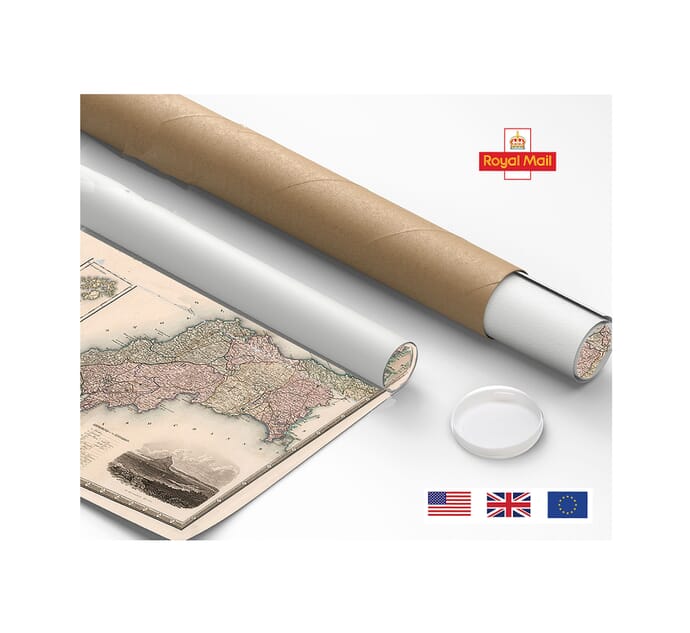
Map in Postal Tube
Buy Old Maps Online in the UK Today Trading online since 1999

The Old Map Company of Great Britain offers a vast and carefully curated collection of the very finest expertly reproduced vintage maps. Our range includes works by renowned cartographers such as John Speed and Willem Blaeu, covering Scotland, England, and beyond. Free UK courier delivery is included, with EU, USA, and worldwide shipping available at cost and calculated at checkout. If you need assistance, our team is always happy to help you choose the perfect map.

RECENT REVIEWS

M.F. Leicestershire
M.F. Leicestershire
Very impressed . . . exceeded my expectations. My son would now like one for Christmas!
Julia Ballester
Julia Ballester
Very pleased with the quality of the map and it even arrived before it was supposed too.
Nikki
Nikki
Amazed to find the church where we married on a 400 year old map. Bought as a 1st anniversary gift.
K.H. Middlewhich
K.H. Middlewhich
I am absolutely delighted with the my antique map. It is so interesting. I would now like to purchase another Map for my sister as a Christmas present.
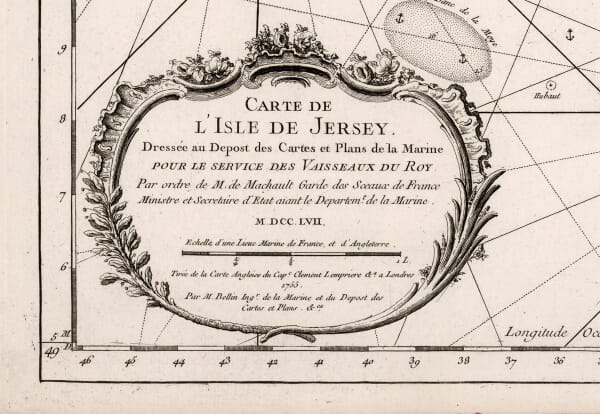
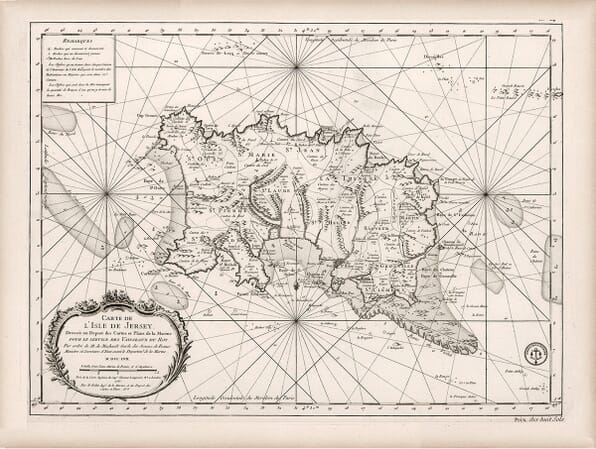
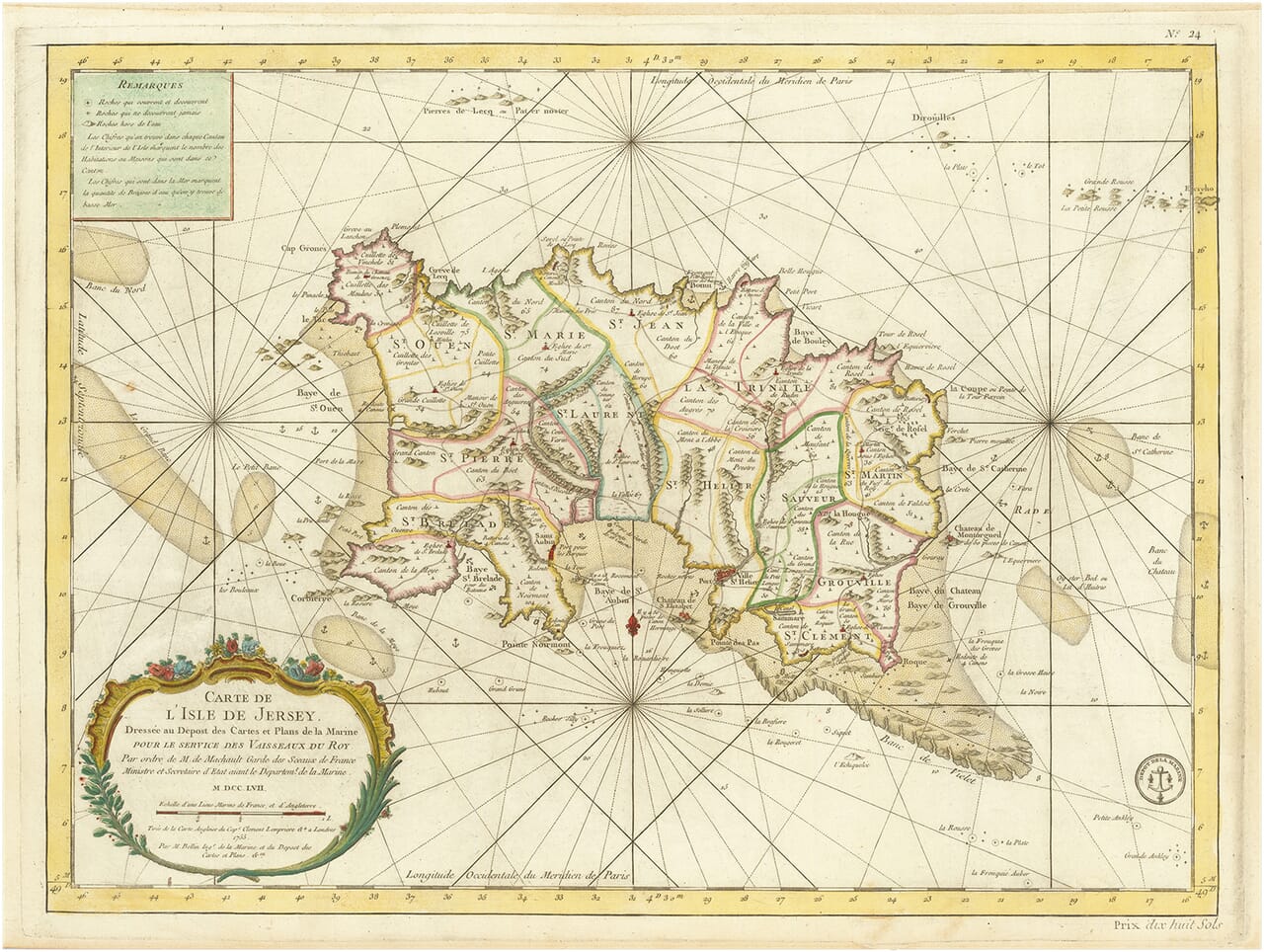
This map, titled Carte de l’Isle de Jersey, is a French naval chart produced in 1757 at the Dépôt des Cartes et Plans de la Marine, the official hydrographic office of France. It was drawn under the authority of the French naval minister and compiled by the royal hydrographer Jacques-Nicolas Bellin, one of the most influential cartographers of the eighteenth century. Although Jersey was under English control, the cartouche explicitly states that the map was derived from an English chart published in London in 1755 by Clement Lemprière, demonstrating the pragmatic reuse of enemy intelligence during the Seven Years’ War. The stated purpose “for the service of the King’s ships”—confirms that this was a working military document, not just a decorative map. The cartouche emphasises royal authority, accuracy, and naval utility. It records the institutional origin of the chart, its English source, and its official approval, while the printed price of eighteen sols and the Dépôt de la Marine anchor seal show that it was also circulated as a standardized government product. The map uses the Paris meridian for longitude, reflecting French scientific practice prior to the international adoption of Greenwich. The “Remarques” panel explains the map’s dual land and sea function. Numbers printed offshore indicate depths in brasses (fathoms), while numbers on land represent the number of houses (habitations) within each canton, an unusually administrative feature for a sea chart. Bellin also clarifies that rocks uncovered at low tide are shown dotted, and that certain dangers are only visible at specific tidal states—critical information for eighteenth-century navigation in Jersey’s treacherous waters. The surrounding seas are meticulously labelled with named banks, reefs, and shoals, reflecting local nautical knowledge. To the west and southwest appear hazards such as Les Pierres de Lecq, Banc du Nord, Les Écréhous, and shoals off Corbière, long feared by mariners. To the east and southeast are features including Banc de St Catherine, Banc du Château, and coastal rocks near Mont Orgueil, all carefully plotted to guide approach routes and avoid shipwreck. These names, many still in use today, underline the chart’s practical precision. On land, the island of Jersey is divided into its twelve historic parishes—St Ouen, St Mary, St John, Trinity, St Martin, Grouville, St Clement, St Saviour, St Helier, St Lawrence, St Peter, and St Brelade and each are subdivided into cantons (administrative divisions) with house counts recorded numerically. These figures provide a rare mid-eighteenth-century snapshot of population distribution, with denser settlement around St Helier and the southern parishes, and lighter habitation in the rural north and west. Such data would have been valuable for logistical planning, taxation estimates, or assessing the feasibility of military operations. Taken together, the map reveals how navigation, military intelligence, and civil administration were closely intertwined in eighteenth-century state cartography.

You may also like…

×
Product added to cart
No products in the cart.